Friday, June 04, 2010

The Future of Life - Why is this so hard for people to deal with?

It's a battle between two narratives:

Narrative 1:
The free market is the most economical system for bringing prosperity to the world and government regulation just screws things up.

Narrative 2:
The free market has many positive benefits, but it also commodifies our collective resources resulting in the catastrophic destruction of the Earth's species and if we don't stop this trend immediately, we will destroy those things that makes life possible on earth.

I am much closer to the second narrative than first.  One of the most persuasive arguments in Wilson's book (he favors Narrative 2)  comes in the chapter "How Much is the Biosphere Worth?" A 1997 study estimated the annual value at $33 trillion.
Ecosystems services are defined as the flow of materials, energy, and information from the biosphere that support human existence.  They include the regulation of the atmosphere and climate;  the purification and retention of fresh water;  the formation and enrichment of the soil;  nutrient cycling; the detoxification and recirculation of water;  the pollination of crops;  and the production of lumber, fodder, and biomass fuel. [p. 106]
Reading this book as oil floods the Gulf of Mexico and eight years after it was published, my basic view of the world was reinforced and my frustration with my fellow humans who choose to ignore the impact human population increases have had on the earth and who choose to ignore the impact of their gluttonous consumption of the world's resources.  It's as though we have been selling off pieces of our back yard garden where we've been growing our food and now we are taking the wood off our house for heating fuel without thinking about where we will get our food and where we will live in the future. When will we realize that consuming our resources like this can't end well?

I sympathize with people who cling to the material things that were part of the American dream as they were growing up.  But I'd also point out that happiness can be found at lower levels  of material consumption.  Sure, we need a basic level of comfort - housing, food, security, etc.  But where is that basic level?  How is it that generations of humans lived well without big screen televisions, without SUVs, without 2200 square foot homes, etc?  Are all these things worth an unsustainable exploitation of the earth's resources?  Wilson says strongly no.


My book group met Wednesday night to discuss E. O. Wilson's book The Future of Life.  It's a short (189 pages) but difficult book.  It's data heavy and could use, as one of the group members suggested, much better headings and titles.  For example, Wilson talks about biodiversity for much of the book and I was looking for where he was going to tell us why this is important.  It wasn't obvious.  I finally found it in the chapter called "For the Love of Life" which would more usefully have been titled "Why Biodiversity Matters."  

Wilson also doesn't do a good job of clearly telling us his key points.  They're there, but hidden in all the data.  I did read the book carefully, taking lots of notes, so I did get some of them.  But without Wilson spelling them out, I have to guess that these are the ones he thinks are the key points.


1.   Biodiversity* is shrinking.  We are losing species and genetic variety at a faster and faster pace every year.

2.  The Causes of Biodiversity are summarized as HIPPO;
Habitat destructionHawaii's forests, for example, have been three-fourths cleared, with the unavoidable decline and extinction of many species.

Invasive species.  Ants, pigs, and other aliens displace the native Hawaiian species.

Pollution.  Fresh water, marine coastal water, and the soil of the islands are contaminated, weakening and erasing more species.

Population.  More people means more of all the other HIPPO effects.

Overharvesting.  Some species, especially birds, were hunted to rarity and extinction during the early Polynesian occupation.  [p. 100;  Hawaii is just the example of what is happening around the world here]
I need to emphasize population because he spends a lot of time on this.  The increase in human population underlies the other four factors. 

3.   It's late in the game to stop this destruction of biodiversity but if humans become aware and have the will, it is possible.  The final chapter is called "The Solution."  I have problems with the idea of a "solution" in human affairs.  We don't solve issues as though they were math problems.  Rather we better balance the factors that affect the issue, and we may well unbalance it in the future.  And given the negativity of most of the book, one wonders whether the author really believes things can be changed or if the editors said it needed a happier ending.  But here are some of the things he offers in that chapter.

  • Ethics - Humans, he argues, have a genetic propensity toward fairness.  If people see that some people are destroying the planet by using more than their fair share, they will fight for fairness. (But what if they are the ones gaining unfairly?)
  • The way is to change people's narrative. We think of the environment (all of its resources) as capital.

    Having appropriated the planet's natural resources, we chose to annuitize them with a short-term maturity reached by progressively increasing payouts.  At the time it seemed a wise decision.  To many it still does.  The result is rising per-capita production and consumption, markets awash in consumer goods and grain, and a surplus of optimistic economics.  But there is a problem:  the key elements of natural capital, Earth's arable land, ground water, insects, marine fisheries, and petroleum, are ultimately finite, and not subject to proportionate capital growth.  Moreover, they are being decapitalized by overharvesting and environmental destruction.  With population and consumption continuing to grow, the per-capita resources left to be harvested are shrinking.  The long-term prospects are not promising.  Awakened at last to this approaching difficulty, we have begun a frantic search for substitutes.   
    This leads to two problems:
    • Economic disparity and
    • Accelerating extinction of natural ecosystems and species

    He suggests adding statistics that take into account the value of the biosphere into our  evaluations of economic assets and deficits as one way to change how we use our resources.

    He then goes on to list the action that can be taken to turn things around


    • Salvage the world's hotspots - those habitats that are both at the greatest risk and shelter the largest concentration of species found nowhere else.
    • Keep intact the five remaining frontier forests (combined Amazon Basin and the Guianas; Congo of Central Africa;  New Guinea;  the temperate conifer forests of Canada and Alaska combined;  the temperate conifer forests of Russia, Finland, and Scandinavia combines.)
    • Cease all logging of old growth forests everywhere.
    • Everywhere concentrate on lake and river systems, which are the most threatened ecosystems of all. 
    • Define and prioritize the marine hotspots of the world.
    • Complete the mapping of the world's biological diversity
    • Use most advanced ecosystem mapping techniques to ensure full range of the world's ecosystems are included in global conservation strategies.
    • Make conservation profitable.
    • Use biodiversity to benefit the world economy as a whole.
    • Initiate restoration projects to increase the share of the Earth allotted to nature.
    • Increase capacity of zoos and botanical gardens to breed endangered species.
    • Support population planning

There are other issues the book raised for me:

1.   What is a reasonable human population on earth where humans can live a comfortable live style that doesn't use up the Earth's resources?

2.   How do we get there?

3.  How do we get people to see the collective impact of individual behavior as we try to balance saving the biosphere and biodiversity with the market economy?

4.  How do we conceive the difference between the death of individuals and the death a species?

5.  How do we understand what is a normal rate of species extinction versus a human caused rate of species extinction?

All of these are addressed in the book to some degree, but need much more discussion.

Some group members expressed the bittersweet hope that the oil spill might help raise people's awareness of how our resource use endangers the planet. 


*From his glossary at the back of the book:

Biodiversty:  All of the hereditary variation in organisms, from differences in ecosystems to the species composing each ecosystem, thence to the generic variation in each of the species  As a term, biodiversity may be used to refer to the variety of life of all of Earth or to any part of it - hence the biodiversity of Peru or the biodiversity of a Peruvian rainforest.  (p. 213-214)


NOTE:  Blogspot sent out a notice that they have a new agreement with Amazon to enable bloggers mentioning books to automatically link to Amazon so that readers can easily buy the  book and the blogger would get a percentage.   I have resisted ads on this blog for various reasons - including aesthetics, conflicts of interest, and the fact that the size of my readership isn't large enough to earn me significant profits anyway.  But I thought I'd mention this.  There are some books I mention I wouldn't encourage my readers to buy.

But this one I think everyone should read.  Including our governor and mayor who strongly support economic development without calculating the costs to the biosphere of the projects.  Neither cares if we wipe out the Cook Inlet beluga whale population - which NOAA has declared an endangered species - if it means that we'd have to think more creatively to maintain our current economic situation.  But the governor has vetoed money that would have added about 1200 kids and about 100 mothers to Denali Kid Care health insurance because some of the money might be used for an abortion.  The intentional loss of one potential human being is more important to our governor, it seems, than the loss of a whole species.

Thursday, June 03, 2010

Alaska Legislative Races - 26% Uncontested

The Lt. Governor's office is in charge of elections and on his website is the list of people who have signed up to run in the August primaries.  The deadline was June 1 and I got this on June 2, but there are some who are still pending certification. 

Five of the 20 Senate seats only have one candidate - that's 25%, all incumbents, who are running unopposed.  Two Democrats and three Republicans. 

[Update:  an ADN Alaska Digest piece today listed 14 unopposed candidates.  I had sixteen.  On double checking the Lt. Gov's website it seems one I had thought was unopposed has an opponent (Kurt Olson), but one the ADN did not list is on the list still as unopposed (Lindsey Holmes.)]


Twelve  [Eleven] of the 40 House seats are unopposed - 30 27%, all incumbents.  Six Democrats and five Republicans.  This is a little misleading though.  Three of the Democrats running unopposed - Regie Joule (Kotzebue), Bob Herron (Bethel), and Bryce Edgmon (Dillingham)- are from rural Alaska and they joined the Republican majorities on the grounds that as minority members they can't get the projects their districts desperately need.

All three seats from Juneau (one Senate and two House) are unopposed.  I'm sure their media markets are not real happy that the candidates won't need a lot of advertisements. 

Below I've cut and pasted the list from the Lt. Governor's website.  I've highlighted the unopposed Republicans in red, the unopposed Democrats in blue, but I've made the House Democrats who joined the majority Republicans purple.  (The Senate was evenly split 10 Republicans and 10 Democrats.  All the Democrats and most of the Republicans joined in a coalition to form the majority.  There were four minority Republicans who did not join the coalition.  Of the minority, only Sen. John Coghill is on the list of candidates.) 

State Senate District B

* Dennis Egan (Democrat) - Incumbent
3156 Pioneer Avenue
Juneau, AK 99801
Phone: (907) 586-6136

State Senate District D

* Pete Higgins (Republican)
3875 Geist Rd, Ste E-126
Fairbanks, AK 99709

* Joe J. Thomas (Democrat) - Incumbent
879 Vide Way
Fairbanks, AK 99712
Phone: (907) 590-4648

State Senate District F

* John B. Coghill (Republican) - Incumbent
PO Box 58003
Fairbanks, AK 99711
Phone: (907) 488-7886


State Senate District H

* Charlie R. "Charlie" Huggins (Republican) - Incumbent
3375 Edgewater
Wasilla, AK 99654
Phone: (907) 373-6419

State Senate District J

* Ron Slepecki (Republican)
8649 Cross Pointe Loop
Anchorage, AK 99504
Phone: (907) 222-0939

* Bill Wielechowski (Democrat) - Incumbent
1300 Farrow Circle
Anchorage, AK 99504
Phone: (907) 333-2806

State Senate District L

* Johnny Ellis (Democrat) - Incumbent
1231 W. Northern Lights Blvd
Anchorage, AK 99503
Phone: (907) 276-4633

* Richard M. Wanda (Republican)
PO Box 211986
Anchorage, AK 99521
e-mail: richardwandaforstatesenator@yahoo.com


State Senate District N

* Ed Cullinane (Democrat)
7232 Hunter Circle
Anchorage, AK 99502
Phone: (907) 830-9755

* Lesil McGuire (Republican) - Incumbent
2022 Kimberly Lynn Cir
Anchorage, AK 99515
Phone: (907) 351-8060


State Senate District P

* Catherine A. "Cathy" Giessel (Republican)
12701 Ridgewood Road
Anchorage, AK 99516
Phone: (907) 345-5470

* Jennifer B. Johnston (Republican)
11090 Hideaway Lake Drive
Anchorage, AK 99507
Phone: (907) 346-1087

* Mark W. Moronell (Republican)
www.moronellforalaskasenate.com

* Janet L. Reiser (Democrat)
PO Box 244993
Anchorage, AK 99524
Phone: (907) 903-3041


State Senate District R

* Gary L. Stevens (Republican) - Incumbent
PO Box 201
Kodiak, AK 99615
Phone: (907) 486-4205


State Senate District S

* Lyman F. Hoffman (Democrat) - Incumbent
PO Box 763
Bethel, AK 99559
Phone: (907) 543-3583

END OF SENATE RACES - BEGINNING OF HOUSE RACES


State Representative District 1

* Kyle B. Johansen (Republican) - Incumbent
PO Box 8601
Ketchikan, AK 99901
Phone: (907) 617-5537

* Ottar Mobley (Democrat)
PO Box 19185
Thorne Bay, AK 99919
Phone: (703) 678-8737


State Representative District 2

* Steven A. Samuelson (Republican)
PO Box 2188
Petersburg, AK 99833
Phone: (907) 723-3664
e-mail: StevenSamuelson@gmail.com
Candidate's web site: http://www.StevenSamuelson.com

* Reber P. Stein (Democrat)
2323 Sawmill Creek Rd
Sitka, AK 99835
Phone: (907) 747-3960

* Peggy Wilson (Republican) - Incumbent
PO Box 2211
Wrangell, AK 99929
Phone: (907) 874-3020


State Representative District 3

* Beth Kerttula (Democrat) - Incumbent
10601 Horizon DR.
Juneau, AK 99801
Phone: (907) 463-5440


State Representative District 4

* Cathy Muñoz (Republican) - Incumbent
2101 Jordan Avenue
Juneau, AK 99801
Phone: (907) 723-8089 e-mail: cathym@riemunoz.com
Candidate's web site: http://www.cathymunoz.org


State Representative District 5

* Robert W. Beedle (Democrat)
PO Box 16
Cordova, AK 99574

* William A. "Bill" Thomas Jr. (Republican) - Incumbent
PO Box 942
Haines, AK 99827
Phone: (907) 766-3365


State Representative District 6

* Alan Dick (Republican) - Pending Certification

* Rex L. Goolsby (Republican)
PO Box 814
Tok, AK 99780
Phone: (907) 883-8218

* Woodie W. Salmon (Democrat) - Incumbent
PO Box 21
Chalkyitsik, AK 99788


State Representative District 7

* Mike Kelly (Republican) - Incumbent
1625 Wolverine Lane
Fairbanks, AK 99709

* Bob Miller (Democrat)
1355 Silverberry Dr.
Fairbanks, AK 99712
Phone: (907) 460-8683
e-mail: miller4statehouseak@gmail.com


State Representative District 8

* David Guttenberg (Democrat) - Incumbent
PO Box 80731
Fairbanks, AK 99708
Phone: (907) 388-0194

* David M. "Dave" Talerico (Republican)
PO Box 521
Healy, AK 99743
Phone: (907) 683-2469


State Representative District 9

* Scott Kawasaki (Democrat) - Incumbent
2008 Carr Avenue
Fairbanks, AK 99709
Phone: (907) 590-0315

* Joseph A. Michel (Republican)
PO Box 61219
Fairbanks, AK 99706
Phone: (907) 347-9636


State Representative District 10

* John S. Brown (Democrat)
814 Austin Street
Fairbanks, AK 99701
Phone: (907) 452-5870

* Urban E. Rahoi (Republican)
1001 Lakeview Terrace
Fairbanks, AK 99701
Phone: (907) 456-6967 or (907) 509-2803

* Vivian M. Stiver (Republican)
523 2nd Ave
Fairbanks, AK 99701
Phone: (907) 347-2102

* Steve M. Thompson (Republican)
PO Box 70843
Fairbanks, AK 99707
Phone: (907) 374-4806


State Representative District 11

* Sean P. Rice (Democrat) - Pending Certification

* Tammie Wilson (Republican) - Incumbent
571 Canoro Road
North Pole, AK 99705
Phone: (907) 590-7602


State Representative District 12

* Bert L. Cottle (Democrat)
PO Box 1049
Valdez, AK 99686
Phone: (907) 835-3700

* Eric A. Feige (Republican)
PO Box 1208
Chickaloon, AK 99674
Phone: (907) 351-2360
e-mail: ericfeige4akhouse12@gmail.com
Candidate's web site: ericfeige4akhouse12.org

* Pete Fellman (Republican)
HC 60 Box 4200
Delta Junction, AK 99737
Phone: (907) 895-4090

* Don Haase (Republican) - Pending Certification


State Representative District 13

* Don Benson (Republican)
PO Box 4059
Palmer, AK 99645
Phone: (907) 745-4913

* Carl Gatto (Republican) - Incumbent
PO Box 2894
Palmer, AK 99645
Phone: (907) 232-3060
e-mail: carljgatto@gmail.com
Candidate's web site: carlgatto.com

* David J. Parks (Republican)
PO Box 1683
Palmer, AK 99645
Phone: (907) 982-5420


State Representative District 14

* Wes Keller (Republican) - Incumbent
PO Box 875910 #267
Wasilla, AK 99654
Phone: (907) 376-6115


State Representative District 15

* Stephen Jacobson (Republican)
2685 N. Alma Drive
Wasilla, AK 99654
Phone: (907) 357-1189
Candidate's web site: www.jacobson4statehouse15.com

* Mark Neuman (Republican) - Incumbent
13768 W. Maplewood Drive
Wasilla, AK 99654
Phone: (907) 354-0800


State Representative District 16

* Bonnie Nelson (Democrat) - Pending Certification

* Bill Stoltze (Republican) - Incumbent
PO Box 464
Chugiak, AK 99567
Phone: (907) 688-5754 or 745-5772


State Representative District 17

* Anna I. Fairclough (Republican) - Incumbent
PO Box 771112
Eagle River, AK 99577
Phone: (907) 694-7090


State Representative District 18

* Nancy A. Dahlstrom (Republican) - Withdrew
PO Box 771094
Eagle River, AK 99577
Phone: (907) 694-4929

* Bill Cook (Republican)
19328 Monastery Dr. #A
Eagle River, AK 99577
Phone: (907) 694-1010

* Dan Kendall (Republican)
PO Box 770616
Eagle River, AK 99577
Phone: (907) 696-7066

* Martin J. Lindeke (Democrat)
16111 Cline Street
Eagle River, AK 99577
Phone: (907) 622-4216

* Dan Saddler (Republican)
PO Box 771811
Eagle River, AK 99577
Phone: (907) 696-5492


State Representative District 19

* Gabrielle LeDoux (Republican)
PO Box 102293
Anchorage, AK 99510
Phone: (907) 677-8159
e-mail: voteledoux@gmail.com
Candidate's web site: www.voteledoux.com

* Pete F. Petersen (Democrat) - Incumbent
8633 Turf Ct.
Anchorage, AK 99504
Phone: (907) 522-6870


State Representative District 20

* Max F. Gruenberg Jr. (Democrat) - Incumbent
4801 Kenai Ave.
Anchorage, AK 99508
Phone: (907) 337-1688

* Scott A. Kohlhaas (Libertarian)
6701 E. 6th Ave. #24
Anchorage, AK 99504
Phone: (907) 337-3171
e-mail: scott@scottforhouse.org
Candidate's web site: www.scottforhouse.org


State Representative District 21

* Robert E. Clift (Libertarian)
6402 Hampton Drive
Anchorage, AK 99504
Phone: (907) 337-9679

* Barbara E. Norton (Democrat)
6130 Country Lane Circle
Anchorage, AK 99504
Phone: (907) 222-2540
e-mail: cnmbarb@gmail.com
Candidate's web site: barbaranortonforstatehouse.com

* Lance Pruitt (Republican)
2954 Brittany Place
Anchorage, AK 99504
Phone: (907) 929-4934
Candidate's web site: www.lancepruitt.com


State Representative District 22

* Sharon M. Cissna (Democrat) - Incumbent
PO Box 141892
Anchorage, AK 99514
Phone: (907) 272-8662


State Representative District 23

* Les Gara (Democrat) - Incumbent
PO Box 202259
Anchorage, AK 99520
Phone: (907) 250-0106


State Representative District 24

* Robert Benton (Republican) - Pending Certification

* Berta Gardner (Democrat) - Incumbent
1405 Matterhorn
Anchorage, AK 99508
Phone: (907) 223-9330


State Representative District 25

* Harley Brown (Libertarian)
2104 Cleveland Ave.
Anchorage, AK 99517
Phone: (907) 744-7646

* Mike Doogan (Democrat) - Incumbent
PO Box 91876
Anchorage, AK 99509

* Thomas M. Higgins (Republican)
3402 Dorbrandt St. #36
Anchorage, AK 99503
Phone: (907) 575-3297


State Representative District 26

* Lindsey Holmes (Democrat) - Incumbent
4149 Hood Ct.
Anchorage, AK 99517


State Representative District 27

* Robert L. "Bob" Buch (Democrat) - Incumbent
3160 W 71st Avenue
Anchorage, AK 99502

* Mia Costello (Republican)
5512 Yukon Charlie Loop
Anchorage, AK 99502
Phone: (907) 770-1702


State Representative District 28

* Jodie Dominguez (Democrat)
205 E. Dimond Blvd. #288
Anchorage, AK 99515
Phone: (907) 248-2111

* Craig W. Johnson (Republican) - Incumbent
12200 Timberlane Dr.
Anchorage, AK 99515
Phone: (907) 349-4307


State Representative District 29

* Chris Tuck (Democrat) - Incumbent
8220 Barnett Drive #2
Anchorage, AK 99518
Phone: (907) 223-6474

* Kris Warren (Republican)
900 W. 86th Avenue
Anchorage, AK 99515
Phone: (907) 344-5914


State Representative District 30

* Charisse E. Millett (Republican) - Incumbent
2860 Beluga Bay Circle
Anchorage, AK 99507
Phone: (907) 227-7673

* Jeannette O. Reddington (Republican)
4460 Mars Dr.
Anchorage, AK 99507
Phone: (907) 947-0308

* Lynda L. Zaugg (Democrat)
PO Box 232401
Anchorage, AK 99523
Phone: (907) 440-2849


State Representative District 31

* Bob Lynn (Republican) - Incumbent
4400 Trapline Dr.
Anchorage, AK 99516-1538
Phone: (907) 346-4447

* Guadalupe "Lupe" Marroquin (Democrat)
PO Box 111956
Anchorage, AK 99511
Phone: (907) 338-9448
e-mail: lupemarroquinforstatehouse@gmail.com

* Steve Pratt (Republican)
3115 Seawind Dr.
Anchorage, AK 99516
Phone: (907) 345-0032


State Representative District 32

* Mike Hawker (Republican) - Incumbent
PO Box 111329
Anchorage, AK 99511
Phone: (907) 346-2844

* Matthew Moore (Democrat) - Pending Certification

* Christian M. Rawalt (Republican)
PO Box 112872
Anchorage, AK 99511
Phone: (907) 727-8097


State Representative District 33

* Kurt E. Olson (Republican) - Incumbent
317 Diane Lane
Soldotna, AK 99669
Phone: (907) 260-4822

* Richard "Dick" Waisanen (Democrat)
44932 Eddy Hill Drive
Soldotna, AK 99669
Phone: (907) 262-6298


State Representative District 34

* Charles M. "Mike" Chenault (Republican) - Incumbent
PO Box 8154
Nikiski, AK 99635

* Ray G. Southwell (Alaskan Independence)
PO Box 6881
Nikiski, AK 99635
Phone: (907) 776-3384


State Representative District 35

* Paul Seaton (Republican) - Incumbent
PO Box 1564
Homer, AK 99603
Phone: (907) 299-3434
e-mail: Paul@VotePaulSeaton.org
Candidate's web site: http://www.VotePaulSeaton.com


State Representative District 36

* Alan Austerman (Republican) - Incumbent
PO Box 8766
Kodiak, AK 99615
Phone: (907) 486-5930

* Andrew Schroeder (Democrat) - Pending Certification


State Representative District 37

* Bryce Edgmon (Democrat) - Incumbent
PO Box 84
Dillingham, AK 99576
Phone: (907) 842-1729


State Representative District 38

* Bob Herron (Democrat) -Incumbent
PO Box 602
Bethel, AK 99559
Phone: (907) 543-4377


State Representative District 39

* Vincent T. Beans (Democrat)
PO Box 32336
Mountain Village, AK 99632
Phone: (907) 591-2347

* Neal W. Foster (Democrat) - Incumbent
PO Box 1633
Nome, AK 99762
Phone: (907) 250-8375


State Representative District 40

* Reggie Joule (Democrat) - Incumbent
PO Box 1269
Kotzebue, AK 99752
Phone: (907) 442-3452

Wednesday, June 02, 2010

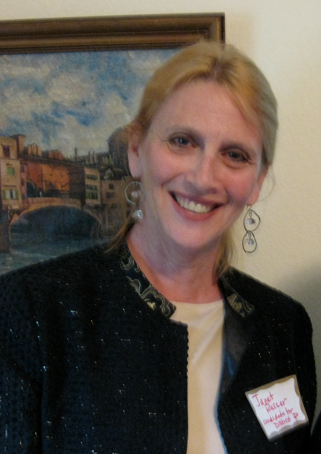
Janet Reiser State Senate Candidate Seat P

My state representative, Berta Gardner, had a reception for Democratic House Candidates last night.  After being in the Capitol every day for several months and then being totally disconnected from all that during our trip, I figured this was a good chance to see some of the folks I'd met in Juneau and to see some of the new candidates.  It was.  Among other things I learned was that Nancy Dahlstrom, House Rules Chair this session,  had resigned from the legislature to take a job with the administration.  I don't think that made it into the London papers.

 I met several of the new candidates, but didn't get pictures of them all.  At left above is Janet Reiser, a chemical engineer, who is running for Senate Seat P, the seat Sen. Con Bunde is retiring from.


Lupe Marroquin a retired public servant, most recently in charge of elections at the Municipality of Anchorage, is running for House in District 31.  This was the first time I actually met Lupe in person, but she went through extraordinary efforts to get us absentee ballots in Thailand in March 2008.  Getting a fax through to us and our getting it back took a lot of work on her part.  I was so impressed that I did a post on her efforts.

Rep. Bob Lynn has a primary opponent on the Republican side.  I got to know Rep. Lynn while I was in Juneau.  The one committee that I attended most regularly was the State Affairs Committee that he chaired.  I found him respectful, thoughtful, and he had a good sense of humor.   If he wins his primary, then the voters of District 31 are assured a good representative no matter who wins.


Jodie Dominquez, shown here (left) with her campaign manager, is running for House District 28 against Rep. Craig Johnson who appeared to me to be a strong advocate for oil and gas interests in the legislature.


I'm hoping that this election Alaska bloggers can take a key role in helping voters get to know the candidates.  My sense is that we (Alaskans) should seriously evaluate the candidates as if we were hiring someone to handle our personal estates.  Because that's what we're doing.  We need to get past the PR television ads that package candidates based on focus group information on how to push voters' emotional buttons.  And we need more than how they come off in a single public television debate.

We need to seriously look at their resumes and determine who is most qualified.  We need to interview them and we need to talk to them in less formal situations.  While I am a registered Democrat, I plan to give as objective information about candidates as possible.  To say that a registered Democrat or a registered Republican can't report on the elections is ridiculous.  That would either mean some of the most qualified reporters couldn't report, or that reporters would have to hide their affiliations by registering independent.  I think it's better that we declare our affiliations and then let the readers consider what we write.

Unlike some other bloggers, I will not use my blog as a partisan forum to push Democrats and attack Republicans.  (That's perfectly legitimate, but just not my style.) But I also can't cover everything.  I will attempt to gather information that will help readers make informed choices.  And I assume that on occasion I will slip into opinion, but it will be supported by the facts.

Here's a video I got of Janet Reiser last night.  One of the nice things about talking to people who are fairly new to politics is that they tend to be pretty open and haven't learned yet to hide themselves behind a professional facade.  Candidate Reiser really seems talks from the heart here.  Yes, she's pushing her candidacy, but she's pretty transparent.


So, Alaska bloggers, let's give Alaskans more information than they've ever gotten about the candidates for the legislature. Let's try to transform this political races to businesslike hiring decisions. If there are skeletons, let's get them out, but I don't think we should focus on the negative. Rather we should help Alaskans get to know the candidates in all their rich complexity.

Tuesday, June 01, 2010

Scott McAdams - February Video of New US Senate Candidate

I'd been getting Google hits for Scott McAdams for a week or so and was wondering what was going on.  Then I heard he was possibly running for the US Senate against Lisa Murkowski.  Today, KTUU says he has announced for the position.  Here's a  bit of video I made back in February when McAdams was in Juneau for an Alaska Municipal League meeting and to do a little lobbying with the legislature.


Monday, May 31, 2010

Memorial Day 2010

Wikipedia gives us some Memorial Day history (I've excerpted just a bit of it below):


By 1865 the practice of decorating soldiers' graves had become widespread in the North. General John Logan, National Commander of the Grand Army of the Republic--the society of Union Army veterans--called for all GAR posts to celebrate a "Decoration Day" on May 30, 1868. There were events in 183 cemeteries in 27 states in 1868, and 336 in 1869. The northern states quickly adopted the holiday; Michigan made "Decoration Day" an official state holiday in 1871 and by 1890 every northern state followed suit. The ceremonies were sponsored by the Women's Relief Corps, with 100,000 members.


The Civil War so dominated the day that after World War I, the new veterans pushed for their own "Armistice Day", now "Veterans Day" in November.
The preferred name gradually changed to "Memorial Day"; in 1971 the date was moved by Congress to the last Monday in May in order to ensure a three-day weekend. It marks the start of summer, just as Labor Day marks the end.
The alternative name of "Memorial Day" was first used in 1882. It did not become more common until after World War II, and was not declared the official name by Federal law until 1967. On June 28, 1968, the Congress passed the Uniform Holidays Bill, which moved three holidays from their traditional dates to a specified Monday in order to create a convenient three-day weekend. The holidays included Washington's Birthday, now celebrated as Presidents' Day; Veterans Day and Memorial Day. The change moved Memorial Day from its traditional May 30 date to the last Monday in May. The law took effect at the federal level in 1971.

[I took the above pictures in April at Arlington National Cemetery.  My wife attended family member Kermit's funeral in 1989.  The pictures below were taken in May at the Vietnam Veterans Memorial.]


It's appropriate to remember people who died and to remember people who died protecting American liberty and freedom.  It's also important to remember that while all US wars were characterized as defending liberty,  many were waged for  more complicated and less noble  reasons.


It's also important to recognize that individual soldiers have gone to war for a variety of reasons that have been masked by the freedom and honor slogans that are used to justify all wars.  It's also true that the soldiers against whom our soldiers fought also believed they were fighting for honorable reasons.   There are situations where one could possibly justify war.  When another country attacks your country seems to be a good justification.  But I also believe that if businesses did not profit from selling weapons, uniforms, transportation, food, etc. to support war, we'd have a lot fewer wars.

As we remember soldiers today, we should recognize that having two days to recognize dead soldiers (Memorial Day and Veterans Day) helps to sanctify soldiers and war.  Soldiers are people who, for whatever reasons, have been mobilized for war.  Many actually experience battle.  Many don't.  For some military service makes them better people.  For others military service destroys them.

And we should remember we don't have equivalent holidays to recognize carpenters, teachers, janitors, social workers, engineers, doctors, waiters, architects, bus drivers, musicians, and others who make our life richer and more comfortable.  Like soldiers, every profession includes heroes and scoundrels.  Soldiers, however, are the one profession who are trained specifically to destroy and kill.  The cost of that activity both on the victims and the perpetrators is horrendous.  When we remember dead soldiers, we should also be reminded of the horrors of war, and that war should be the very last step we take to protect our freedoms when all other options have been exhausted.

Power's Out

We were eating on the deck about 7:40 pm.  It was windy, but still pleasant.  There was a loud boom.  I really thought it was a gunshot nearby.  J went inside to get something and came out to say the power was off.  It took a while to reach ML&P and I heard a neighbor telling another neighbor the power was out.  ML&P said a tree had fallen on the wires. 


When I got back from checking the tree, I noticed our chocolate lily was blooming. 


Fortunately, it is late May in Alaska so it's still light out at 11pm.  And the neighbors across the street still have power so I can post this on an unlocked wifi.  I'll schedule it for early tomorrow.  Maybe we'll have power when we get up.  My laptop only has about an hour left. 

Sunday, May 30, 2010

Epistemology, Palin, Obama, BP, Humpty Dumpty, and the King and I

[Bumper stickers sometimes sum up one's position succinctly.  But the world is complex and everything is ultimately connected.  So I don't apologize for bringing together a lot of disparate points.  But I do apologize for not doing it better.  I do hope that at the very least a few readers think about how they know what they know.]

I had just gotten into my window seat,  my seat belt buckled,, my book out, and my backpack under the seat, when the woman sitting in the aisle seat, after establishing that J has lived in Alaska over 30 years (the woman said she'd been there only ten), asked what J thought about Sarah Palin.

We'd been in Europe for almost a month and we heard that question a lot when people found out we were from Alaska.  In Europe the question almost always had a tinge of snark but also a recognition that perhaps a local could fill in missing details. Just to mess with their stereotypes, I often pointed out that Palin came into our consciousness when she resigned her oil and gas commission seat in protest over ethics (or so we thought at the time) and then went after the sitting Republican governor for closed door meetings with the oil companies and when elected rehired the Natural Resources team that had resigned in protest of Gov. Murkowski's dealings with the big oil companies.  But then I would reassure them that once she got nominated for vp, things changed and we saw a totally different view of Sarah Palin.

So, I was trying to engage my book as J politely, but more heatedly than is her custom, told the lady what she thought.  The lady then defended Palin.  "I went to lunch with her during the campaign and she's wonderful."  Things seemed to be winding down and I was getting back into my book when the lady asked J about Obama.
J:  "I think he's terrific."  
Lady:  "He's not an American you know."
J:  "Of course he is."
Lady:  "He was born in Kenya."
J:  "He was born in Hawaii"
Lady:  "Hawaii was a territory when he was born so even if he was born there he isn't a citizen."  [Hawaii became a state in August 1959.  Obama was born in August 1961.  People born in territories are US citizens anyway.]

I'm usually pretty unflappable, but at the end of traveling five weeks, with lingering cold symptoms, I was planning a quiet trip reading The Future of Life by socio-biologist E. O. Wilson and I totally lost it.  As J was trying to explain that even if Obama had been born in Kenya instead of Hawaii he would still be a US citizen since his mother was an American citizen, words flew out of my mouth - something about not wanting to listen to this bullshit for the next six hours.  That got both their attentions and they agreed to drop the topic as I put in my earplugs.

I immediately thought of a lot of other ways I could have handled it - like asking how she knew everything she claimed to be true, or even agreeing with her and then pushing to see if I could get her to agree that living under a black president meant our way of life was over and other racist garbage.

Epistemology (go here for a more scholarly discussion) is basically the study of how people can determine what is true.  Is it something you just know inside your head or in your gut?  Does it require external verification? If so what sort of verification?  Do different kinds of truths require different sorts of justification?  Knowing you have a headache is different from knowing what causes headaches.  

There's a whole lot of very questionable 'truth' out there these days.  There always has been, but we think in this era of modern technology we should have a much larger proportion of the population rejecting baseless truths or at least harboring some doubts about what they know. But the spurious truths are alive and well including among the supposedly well educated.  I know this because there are so many contradictory realities being claimed as Truth.   How many people actually think about how they know what they know?  

Why does this matter?  I've done a lengthy post on why people should study philosophy before, but this blog is about how we know what we know in the broadest sense and the fact that so many people 'know' totally different truths means to me, more time should be spent on studying how we know what we know.


As I pondered this morning the woman who believed that Obama is Kenyan, the BP officials who assured Congress there was no danger in drilling in the Gulf of Mexico, and our Governor demanding that off shore drilling in Alaska proceed this summer to protect jobs, I couldn't help but scratch my head and wonder how these people came to believe these things.  I randomly pulled out a record, put it on the turntable, and as I was finishing my stretches, I heard Yul Brynner singing these 60 year old lyrics:
When I was a boy
World was better spot.
What was so was so,
What was not was not.
Now I am a man;
World have changed a lot.
Some things nearly so,
Others nearly not.
There are times I almost think
I am not sure of what I absolutely know.
Very often find confusion
In conclusion I concluded long ago
In my head are many facts
That, as a student, I have studied to procure,
In my head are many facts..
Of which I wish I was more certain I was sure! [lyrics from allmusicals.com]
(Yes, Oscar Hammerstein gave the King a questionable English, but that doesn't change meaning of the lyrics.)

It's much better put to music in the Youtube (there's no video, just the cover pic) below:
[UPDATE June 5, 2012: The original youtube had been removed so I've replaced it with this one.]
[UPDATE Jan 9, 2013:  The second video went private.  Here's a better one.]


It's a Puzzlement from Andrew MacGregor Marshall on Vimeo.

Why are so few politicians, businessmen, and other anointed experts willing to publicly question what they know?  Do they at least question themselves in private?

Some, I'm sure, really do believe what they say.  I am sure that BP would have done something different had they known their actions would lead to this catastrophic oil spill.  Minor spills are ok - we have them all the time in Alaska, including right now - but the big one in the Gulf, besides hurting BP's bottom line, causes them and other oil companies severe political damage they would rather avoid.  Surely they believed nothing like this would happen.  (I realize that companies routinely calculate the costs of accidents and take risks if they think the gains are greater than the costs, but this one seems beyond that sort of calculation.)

But what kind of person can be so certain about things they don't know?

Hubris plays a role.


Competition is another factor.  Winning is more important than truth for many.  BP officials wanted their project to get approved and so they said what they needed to say.  This overlaps with the next reason.

Self interest also plays a big role.  The 'inconvenient truths" are those that, if we believed them, would require us to change our behavior.  Global climate change threatens many people because they can't imagine how they would live at a lower level of energy consumption.  We ask  soldiers to risk their lives in wars in oil producing countries, but many people aren't willing to make much smaller sacrifices like turning down the thermostat, driving less, or giving up their motorized sports toys.  Believing stories about American superiority, our rights to be free to do whatever we want, or about scientific progress help people avoid having to make adjustments in their lives and in their heads. The consequences of consuming oil are a minor cost for the American way of life.  Large corporations pay their employees well, so they have a stake in toeing the company line. 

Even our governor, while the Gulf of Mexico is bespoiled, sees no reason to delay Shell's drilling in offshore Alaska.  
“The decision to suspend drilling operations in the Arctic Ocean is based on fear, not sound science. Alaskans have experienced firsthand the ravages of an oil spill with the Exxon Valdez in 1989. We never want to repeat that experience, and our hearts go out to Gulf Coast residents suffering from the effects of the Deepwater Horizon tragedy. On the other hand, Shell’s proposed exploration plan in the Chukchi and Beaufort seas has been reviewed extensively.
“I simply cannot understand how the federal government could approve plans of exploration only five months ago - approvals that were upheld by the Ninth Circuit Court of Appeals – but now refuse to take the final step in a long regulatory process and not authorize Shell’s permits to drill. Shell’s leases should be extended, and they should be able to continue seeking permits from the Environmental Protection Agency and the National Oceanic and Atmospheric Administration.
 So, the same people that approved the Gulf drilling can be trusted to approve the Chukchi drilling.  This is different, he tells us, because it's shallower.  But it has lots of other issues like severe weather conditions that are unique.  His professed lack of understanding indicates a severe mental limitation.  He may not agree, but certainly he should be able to understand the feds' concerns.   Even the  "Shell officials said they understand the decision and welcome the additional scrutiny the delay brings." [ADN]

(There's lots more in there - the fear and science line for example - to deconstruct, but I'll leave that for others now.)

I don't know through science any more than the governor does, but I do know that the Louisiana politicians were all enthusiastic about drilling in the Gulf for similar reasons and similarly rejected environmental concerns. 

I think that Gov. Parnell, in his heart,  truly believes Chukchi and Beaufort drilling is perfectly safe.  His whole world view privileges big development projects over environmental concerns, includes the idea that conquering nature is man's duty. 

What chemistry of values and knowledge risks such a spill in Alaska waters for those temporary jobs? What brain chemistry can't imagine and create other sorts of ways of respectably supporting one's family? Can dismiss the potential environmental risks?  Can't delay for a year the drilling in light of the Gulf spill?

I too am biased by my world view, but I'm not running for office and I don't have the kind of stake a sitting governor has to his party and to what he thinks the voters want.   I'm still considering  the portrayal  I read in biologist Wilson's book on the plane of two competing realities in the world today.
The economist is focused on production and consumption.  These are what the world wants and needs, he says.  He is right, of course.  Every species lives on production and consumption.  The tree finds and consumes nutrients and sunlight;  the leopard finds and consumes the deer.  And the farmer clears both away to find space and raise corn - for consumption.  The economist's thinking is based on precise models of rational choice and near-horizon time lines.  His parameters are the gross domestic product, trade balance, and competitive index.  He sits on corporate boards, travels to Washington, occasionally appears on television shows.  The planet, he insists, is perpetually fruitful and still underutilized.

The ecologist has a different worldview  He is focused on unsustainable crop yields, overdrawn aquifers, and threatened ecosystems.  His voice is also heard, albeit faintly, in high government and corporate circles.  He sits on nonprofit foundation boards, writes for Scientific American, and is sometimes called to Washington.  The planet, he insists, is exhausted and in trouble. 

Another human inclination - blaming - is also evident in the oil spill.  Does Gov. Parnell not connect the blame going towards the BP officials and their private servants at the Minerals Management Service with himself if a similar accident should occur in Alaska?

Even Obama is getting some blame for not making the oil spill go away. But once something is broken, we can't simply fix it. Some things simply take time.  Just as we can't speed up a pregnancy, once the spill is underway it will take a certain amount of time to play out.  Even with perfect  knowledge and the capacity and  resources on hand to attack something like this, it will still take time.  We don't have anywhere near perfect knowledge, and we have various people withholding information to avoid blame (ie BP official taking the Fifth to avoid testifying), so it will take even longer.

But blaming people transfers responsibility from those who elect the politicians who do big oil's bidding.  We all share responsibility if we drive and fly.  Americans, particularly, use up a lot more resources than others.  Wilson writes:
[T]he average amount of productive land and shallow sea appropriated by each person in bits and pieces from around the world for food, water, housing, energy, transportation, commerce, and waste absorption. . . is about one hectare (2.5 acres) in developing nations but about 9.6 hectares (24 acres) in the United States.  (p. 23)  [An average city lot is about 1/4 of an acre.]
(It would be nice to find  a personal footprint calculator to help people figure out how big a footprint they leave and how to reduce it. Updated Sunday 5/31/10:  Anon offers this link to calculate your ecological footprint in the comments below - and a long discussion of McCain's citizenship questions.  Thanks!!)

It's much easier to prevent environmental disasters from happening than it is to undo them after they happen. As we were taught as children, "All the king's horses and all the king's men, couldn't put Humpty together again." That's why learning to think in the long term with a macro view that connects the seemingly unrelated and to understand epistemology are all important.  (Well, I'm not sure how many people can actually understand epistemology, but at least to understand the questions epistemologists raise.)

So I believe we need to think more about the many ways we endanger the world and take those potential damages seriously, before it's too late. Be more skeptical about what we think is true.  (Are you listening Governor?)  We need to be less certain, less willing to proceed despite potential dangers, more willing to live less luxuriously, and more willing to question those truths 'leaders' tell us when they assure us they know what they are doing.

But that questioning needs to disciplined and reasonable. Not the kind of challenge that claims its own certainty such as those who "know" Obama is a Kenyan Muslim. Rather, we need the kind of questioning that challenges with fact and reason those who believe in projects that support their own well being at great risk to others.

Saturday, May 29, 2010


 It was still 74˚F out at 8pm tonight according to our indoor/outdoor thermometer.  [I decided the thermometer was aesthetically boring so I fixed it up a bit in photoshop.  The outdoor temperature is the blue vertical line.]


So we ate out on the deck tonight.
I didn't do a lot today, but I did cut the dandelions before they turn to white seed puffs. 

 It's nice being home. 

Ambassador for Hugs

Back on May 1, 2007 I posted a Youtube video on the Free Hugs movement.  When we were in London, on May 2, 2010 I saw a man with a free hugs sign near the speakers' corner in Hyde Park.  It was cold and windy.  So, now that we're home, I'm trying to catch up on some of the backlogged pictures from the trip.  Here's a short video with Stuart McElwaine whose business card says he's an "Ambassador for Hugs."


You can get more information about free hugs at www.freehugs.org.uk 
[That doesn't seem to be working now when I'm setting this up.  Try this one instead.]


[Update 5/30/2010:  I just found these other pictures I took at Hyde Park]


Thursday, May 27, 2010

Back - Chicago to Anchorage Brings Us Home

It's day 40 in my little pocket notebook of our trip and we're back in warm, sunny Anchorage. 

Wednesday was hot in Chicago according to the Fifth Third Bank.  But Thursday it was much more comfortable. 


On the way to the airport we passed the original Mars Candy factory.


And a little later the Radio Flier factory.


Coming into Anchorage on a clear day is always spectacular and today was no exception. 


Our backyard thermometer says 72˚F (22˚C) and the narcissus are blooming and everything smells sweet from cottonwood. 

I had thought that the American flight we were booked on was really partnering on the Alaska Airlines non-stop from Chicago.  It turns out there are two non-stops from Chicago leaving withing half an hour of each other.   Market efficiency isn't always that efficient I guess. 

Millennium Park - The Bean and Gehry Concert Shell

Here's a map of the park.  It's a bit confusing because they use the names of the donors for the parts and I used the names people actually used.  So Harris Theater is the Gehry Concert Shell and the Cloud Gate is the Bean.   The Crown Fountain, which is the topic of the previous post, is in the lower right.  The flowers are from the Lurie Garden.  And the long shot of the park is from the Nichols Bridgeway but off the map to the right.  From what I can tell, North is to the left. 


This is looking at the bean (Cloud) from the south (right on the map).


This is from under the bean.  I took a video of walking to and under the bean.  I haven't had a chance to see how that came out.  If it's ok, I'll put it up after we get home. 

This is the band shell by Frank Gehry.  The next picture is further back. 


From the Nichols Bridge as we walked over to the Art Institute.


Meadow Sage, peonies, and an unidentified bird.

The park is free, but if you come by car, it's not cheap. It was $19 for the first three hours, then $2 for the fourth hour.

[UPDATE:  I've corrected my inexcusable misspellings of Gehry's name.  Just suprised no one corrected me earlier.]]

Millennium Park Chicago: The Fountain


I'm going to do this park in two or three parts.  I'm still processing the idea of this in-your-face downtown park that says "Don't sell Chicago short.  We play with the big boys!"


This post is about the spectacular and outrageous fountain which combines water with an electronic entertainment center. 


 There are two blocks 'facing' each other (literally), dripping with water.  The picture above is from the side of one looking across to the other.  The Millennium Park website says (in part):

Designed by Spanish artist Jaume Plensa and inspired by the people of Chicago, The Crown Fountain is a major addition to the city's world-renowned public art collection.

The fountain consists of two 50-foot glass block towers at each end of a shallow reflecting pool. The towers project video images from a broad social spectrum of Chicago citizens, a reference to the traditional use of gargoyles in fountains, where faces of mythological beings were sculpted with open mouths to allow water, a symbol of life, to flow out. Plensa adapted this practice by having faces of Chicago citizens projected on LED screens and having water flow through a water outlet in the screen to give the illusion of water spouting from their mouths. The collection of faces, Plensa's tribute to Chicagoans, was taken from a cross-section of 1,000 residents.


Here's the other side.  They spit at the same time. 


In between, everyone is enjoying the cool of the water.  Where the ground was dry it was burning hot in the 90F weather. 

And the faces kept changing.


Wikipedia has extensive coverage of the park and the fountain.  It's called the Crown Fountain and here's the intro to Wikipedia's bio of Mr. Crown:

Lester Crown (born 1926) is the son of Chicago financier Henry Crown (died 1990), who created Material Service with two brothers in 1919, which merged with General Dynamics in 1959. He has been a perennial member of the Forbes 400 list since 1982. Lester controls family holdings, including large stakes in Maytag, Hilton Hotels, Alltell, Aspen Skiing Company, New York's Rockefeller Center, and pro basketball's Chicago Bulls. He also holds a stake in the New York Yankees, being a Partner since 1973. Presumably, the large stake held in Bank One at the time of the 2003 Forbes 400 listing has converted to JPMorgan Chase stock and was derived from an interest in First Chicago, which was enumerated in the 1998 Forbes 400 list as First Chicago NBD shares. Recent achievements include brokering a controversial agreement to expand O'Hare International Airport, and spearheading the funding of the new Cook County Hospital (Stroger Hospital). He is a major benefactor of Jewish charities, universities and the Aspen Institute. He is the chairman of the Commercial Club of Chicago and Chicago Council on Global Affairs. His current hometown is Wilmette, IL.