Showing posts with label Transportation. Show all posts

Wednesday, April 29, 2026

Why Books? Some New Ones At the Library

 While picking up my next Book Club book at Loussac Library, I went up stairs to peruse the new book section.  In this day of 300 character social media posts, I find books a great place to retreat to a deeper way of knowing about the world.  

So here are, in no real order, some of the books I looked at in the New Books section. 


Hush:  How to Radiate Power and Confidence… by Linda Clemons   (for an audio intro:  https://www.youtube.com/watch?v=0FyKL-6OvyE )


I saw Hush first   This is a self-help book to give the reader "power and confidence."  The "without saying a word" more than suggests it's going to be about body language.  There's a link above to an audio intro to the book by the author, who let's you know she can tell all your secrets by the way you hold and move your whole body as well as parts of your body.  


Language is Gesture
 -  by David McNeill     I saw this second book, ostensibly on an overlapping topic a bit later.  This is more of an academic book outlining this idea that language is based on gesture.

"Abstract:

A new way of viewing language, as a dynamic mode of meaning-making of which gesture is a fundamental part.

When David McNeill began his work on gesture more than forty years ago, language and the action of speaking were regarded as separate realms. But language, says McNeill in Language Is Gesture, is dynamic and gesture is fundamental to speaking. Central to his conception of language, and distinct from linguistic analysis, is what McNeill calls the “growth point,” the starting point of making thought and speech one. He uses the term “gesture–speech unity” to refer to the dynamic dimension of adding gesture to speaking. It is the growth point that achieves this unity, whereby thought is embedded in gesture and speech at the same time.

Gesture is the engine of language. It is foundational to speaking, language acquisition, the origin of language, animal communication, thought, and consciousness. Gesture is global and synthetic and brings energy; speech is linear and segmented and brings cultural standards. The growth point is a snapshot of an utterance at its beginning psychological stage, the starting point of unifying thought and speech. Growth points create gesture–speech unity by synchronizing a bundle of linguistic features with a gesture that carries the same meaning. This gesture–speech unity is a form of thought, a unique form of cognition."  [From Linguist List]

I found the similarity of the covers of these four books interesting.  


The Rolling Stone's review title is 

"OZZY OSBOURNE’S ‘LAST RITES’ MEMOIR  IS HAUNTING, REVELATORY, AND OFTEN DEEPLY SAD"

Rolling Stone offers 14 things they learned that hadn't been in other Osbourne bios.  There was nothing I needed to know, but if you're a big Osbourne fan, maybe , . .


From Kirkus on Sumner:

"A skillful blend of legal history and biography that honors the 19th century’s foremost champion of civil rights..".

Given today's Supreme Court ruling gutting the Voting Rights Act, perhaps we can bring Sumner back to life to help fight again for civil rights.  The decision is 36 pages.  Kagan's dissent is 48 pages.


Also from Kirkus on Lionel Richie's book:

"There’s an abundance of love and gratitude in this wildly entertaining, utterly charming memoir."


Roosevelt, also from Kirkus
"Roosevelt’s forceful life is portrayed as the embodiment of America 'as it was meant to be.'

Baier, chief political anchor for Fox News, is a prolific biographer whose volume on Theodore Roosevelt joins his works on George Washington, Ulysses S. Grant, Dwight Eisenhower, and Ronald Reagan. The author’s portrait of the 26th president draws on Roosevelt’s writings, diaries, letters, speeches, and other biographies. Baier sketches Roosevelt’s transformations to politician, president, soldier, writer, and naturalist. .  .

This portrait of an iron-willed president digs only so deep."

I wonder if the author embraces Roosevelt's trust busting and preservation of natural wonders in National Parks.  


When All the Men Wore Hats, Susan Cheever

 The Cheever book looked particularly interesting, though I've only read a few of her father's short stories.  


From Spectrum Culture:

"When All the Men All Wore Hats, the second study by author John Cheever’s daughter Susan, follows Home Before Dark, her longer 1984 memoir, inevitably repeating some of the material. Both accounts blend candor and tact, respect and pain, as she delves into his sense of never quite belonging to the patrician New England-New York smart-set her father limned.

John came from a checkered New England legacy, one that, like the many floundering characters in his short stories, trended downward. Susan archly observes: “The New Yorker was the stern father who would occasionally hand you a dollar and tell you to go and buy yourself a new fifty-dollar shirt.” Cheever’s standout stories mostly had been published before the 1966 success of the adaptation of The Swimmer into a Burt Lancaster film, and John didn’t publish more than a handful of stories at the magazine that had cemented his mid-century reputation after that."


Cloud Warriors, Thomas E. Weber 


 From Princeton Alumni Weekly:

"As his reporting proceeded, Weber began to focus on why more accurate forecasts don’t necessarily translate into better outcomes, in lives and property saved. Weather satellites, radar stations and the specialized scientific knowledge to understand the data they produce are all important, he concluded — but a key, underappreciated factor is how to manage human psychology.

A turning point came with Weber’s interview with a social science expert who traveled to locations that had recently been struck by tornadoes. As her colleagues were focusing on estimating wind speeds and damage patterns, this researcher was asking community members about the warnings they’d heard before the storm and how they decided to take the actions they did.

“I realized then that there was a huge push in the weather world to start better understanding people, as well as the atmosphere,” Weber says. 'The real issue is, how do you get people to make the safest decisions? You have to communicate that to people in a way that gets them to treat it with a gravity that is appropriate to the danger. It’s a complicated chain of events.'”


Empty Vessel:  The Story of the Global Economy in One Barge, by Ian Kumekawa 


From the New York Review: 

Over the past few decades journalists and academics have chronicled the “lawless ocean,” documenting widespread human rights abuses in the shipping and fishing industries and what might be termed “the outlaw sea.” In Empty Vessel, Ian Kumekawa, a historian at MIT and Harvard, finds that the seas are in fact replete with laws—but that many of them are designed to get around other laws, to exploit or create loopholes, or to obtain regulatory and tax advantages, all with the goal of maximizing profits for shipping companies. This parallel offshore universe of laws and contracts was slowly built up by lawyers, corporations, and territories that function as tax havens, enabling them to reap profit without paying their due—and becoming central to what we call globalization.


Empty Vessel tells the story of a single barge, from its construction at a Swedish dockyard nearly half a century ago to its current status as a rusty, “laid up” accommodation barge for oil workers in the port of Onne in Nigeria. (The book also cursorily follows its sister ship, an identical vessel built at the same time, which had a similar course over the years.) By tracking the ship’s many lives—as a floating barrack for British troops during the Falklands War, as a prison ship moored at Pier 36 in Lower Manhattan and then in Portland, England, and as a temporary housing barge for assembly line workers in West Germany—Kumekawa charts the dramatic transformations that the world economy has undergone since the 1980s: globalization, the decline of manufacturing, financialization, neoliberalism. The ship’s trajectory lays bare both the physical infrastructure of the global economy—in the form of ships, ports, and the workers who operate them—and the invisible legal architecture without which it would be impossible. 


The Injustice of Property - Steven Przybylinski


"With the rise of homelessness in many U.S. cities, municipal governments are sanctioning organized encampments as an official strategy for sheltering unhoused people. Examining the shortcomings and consequences of these municipal policies, The Injustice of Property explores how unhoused individuals living in self-managed encampments navigate and organize themselves within and against the confines of liberal property systems. Through ethnographic research in Portland, Oregon, a paradigmatic city in advancing this model of homeless shelter, Stephen Przybylinski details the everyday struggles of self-managed encampments to highlight how key contradictions inherent to liberal ideology maintain property as a means of structuring sociopolitical equality. He argues that justice cannot be realized for unhoused communities within the liberal model of private property due to how liberalism and liberal ideology prioritize the rights and values of property over the personal rights of self-governance.

The Injustice of Property is a conceptually robust and empirically rich account of the limits of liberal thinking regarding what “just” property relations look like for unhoused and housed people alike. The book shows that while encampment communities struggle to establish alternative property relationships to the traditional model of private ownership, the injustices that residents of encampments face provoke a necessary reevaluation of how beneficiaries of property systems influence who can become housing stable and on which terms. This insightful book reveals how the injustices surrounding Portland’s encampment communities reflect the limits and injustice of liberal property more broadly."  


The Cost of Being Undocumented, by Alix Dick and Antero Garcia

From interview on UUWorld:

Dick: I would like people to understand that the decisions that immigrants make were never made lightly. Nobody leaves home by choice. When people read this book, I want them to understand that what happened to me could happen to anybody. It’s a privilege to think that tragedy will never hit you.

A black-and-white portrait of Antero Garcia, couthor of "The Cost of Being Undocumented."

Antero Garcia: Taking the “cost” part of the title, I hope readers see that the costs of undocumented life are so much more than just financial numbers. Sure, we offer a financial estimate of what living undocumented has cost Alix at the end of the book. However, more importantly, I want readers to understand the toll of living away from family, of navigating language and social barriers, of losing the opportunities for youthful joy in a new country. The financial costs also go both ways: while existing economic reports point to the fact that undocumented individuals actually provide a net-benefit to the U.S. economy, Alix’s story also highlights the ways wage theft, out-of-pocket medical expenses, and inaccessible university costs actually extract even more income for the most marginalized individuals in this country.


 I pulled out a few more books, but this is a good enough selection.  In this time of social media, influencers whose test for truth is how many viewers they have and how much money those viewers bring, and a president who's truth is measured by his own perceived best interest, taking a mental vacation from all that and reading a few books feels like a luxury.  

And it's a good time to support your local library.  Most have a new book section.  You can even find a comfy chair and just lose yourself in the library.  

Friday, November 22, 2024

Anchorage Stuff - Garry Kaulitz Art, Highway Proposed Over Chester Creek, Film Festival Coming Soon

from Fog 24 Gallery


Garry Kaulitz was a long time University of Alaska Anchorage artist and professor.  His works are still alive and available online.  Here's the link.   Worth a look.  


A letter from the Rogers Park Community Council alerts neighbors of a Department of Transportation proposal to put a highway above Chester Creek.  There's a meeting at the Senior Center - which would, if I read the map right, be under the viaduct.  

Meeting to discuss is  

TUESDAY, DECEMBER 10, 2024 

FROM 4:30PM TO 6:30     

SENIOR CENTER


And I'd be remiss if I didn't remind folks that the Anchorage International Film Festival begins Friday, Dec 6, 2024 and runs through Dec.15.  

This image is from the page labeled 'FILMS'.  It keeps going well below this screenshot.  


There are always great films as well as some that are not so great.  But everyone has different tastes so there will be something for everyone.  Films will mostly be at the Bear Tooth and the Museum.  

There is also a change in the festival organizers this year.  I described that a little bit back in September and you can see that post here.

I'll cover more about individual films soon.  

There's a new tab up on top under the orange banner for AIFF2024.  That will be an overview of the Festival and an index of my posts about the festival.  

Sunday, May 05, 2024

Sometimes A Car Repair Shop Is A Community - Ralfy At Culmination Motorsports

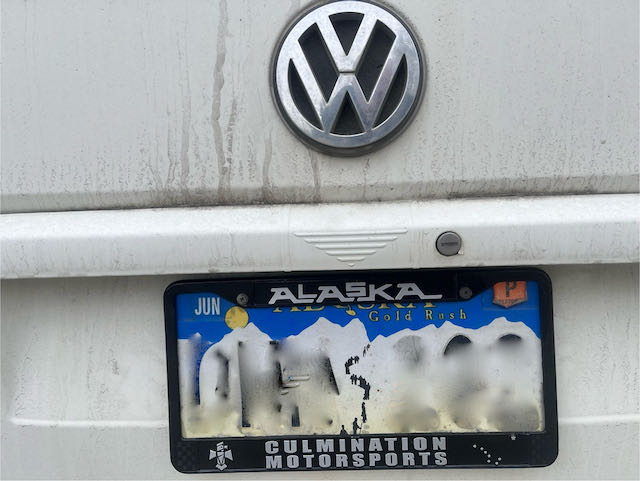
I got my 1971 VW Westphalia serviced by Kurt Schreiber in Wasilla for nearly 20 years until he retired.  Around that time our 25 year old van had holes in the floor and we got wet when we went through puddles.  I worried we might lose a passenger if we hit a bad bump.  Kurt said, "Steve, you've gotten your money's worth.  Time to let it go."

Sticker shock kept us from replacing the old van.  The new one was ten times what we paid for the first one new.  But since I wanted to be in a tent and my wife wanted to be in a hotel, the camper was the compromise that we needed.  It took two years to take the leap.  

Our kids were Outside.  M, at school in Boston said the dealers laughed at her when she inquired about VW campers.  They didn't sell them.  J, in Seattle, found a new one for $5,000 less than the Anchorage price.  He drove it up to Vancouver and we flew down for a family week there, then drove it back to Anchorage.  

Since then,  getting maintenance was more like a business deal than dropping it off with a friend who knew how to fix my car and I knew I could trust.  

But when I called Arctic Imports to schedule a maintenance this year, they said they no longer

worked on VW vans.  But when I asked, they gave me the name to two places who would.  Arctic is a little funkier than most businesses, but at Culmination it seems like everyone cares about you and your car.  

Culmination Motorsports sounded a bit ominous, but their website said they specialized in German cars and did everything from general maintenance to restoration.  Perfect.  

I think this is going to be more of a community than a business relationship.  Listen to owner Ralfy talk about his business in the video below.  Why the name Culmination?   The difference between 'new', 'classic', and 'vintage.'  Who his customers are.  The 'cult' of Culmination.  Why repair shops no longer have brand names in their names.   Toward the end he explains that Eurovans are sort of like the neglected step-child of VW. 


I'd note that I haven't done much video in the last few years (and YouTube has lots more options and requirements than it used to) and I don't often blog about businesses.  Only when I'm impressed.  And, of course, there's no payment from the business in return.  


Can you find the 'bright golden 160' Ralfy mentions in the video?  For people who know where the Fire Island Bakery South Anchorage location was - that's now Rafelito's and Culmination Motorsports.  I couldn't find addresses on any of the businesses on the short stretch of 91st west of King Street when I first went there.  The street turns right and dead ends.  It was the VW vans in the parking lot that told me I was at the right place.  


So, now I'm waiting for other VW vans to honk and wave.  (Well, that sort of happens anyway.)

Sunday, December 05, 2021

What Red Light?

I was on my way home from 80,000 Schnizel at the Bear Tooth.  On La Touche waiting to turn left onto 36th.  It's generally a long light.  I was the second car.  After at least 30 seconds of red light, the car in front of me started to inch forward.  Was he really just going to ignore the light?  I grabbed my phone.  There's no question the driver knew the light was red.  They'd been waiting there for a while. Just didn't feel like waiting any longer I guess.  The phone says I took the pictures at 3:15pm.


It was at least another 30 seconds, maybe more, before the light changed to green.  These are low res pictures because even on my phone the license wasn't legible. It was either really dirty or even a paper dealer's license.  I'd like to think this was someone trying to get to Providence Hospital and decided it was safe to go.  

Once at this intersection, the light had turned green and I was just starting to go, when I realized a car was speeding down 36th from the east and wasn't planning to stop.  


Sunday, September 06, 2020

Mushrooms And The Buses - More Denali Pictures

 Here are some more pictures from Denali - the Alpine Trail and the Healy Overlook Trail.  


This was the Alpine trail.  Nature's a pretty good landscape artist.  


I'm not sure what these black mushrooms are, but they're pretty cool.  


I think these are puffballs.  


Ever since I read Richard Wright's  The Overstory, I realize that 'rotting' log just doesn't convey the process of giving back life that trees do after they die.  They're homes and food to untold species from small mammals, birds, and too many insects to even think about.  And then they give back all their nutrients and atoms for other trees and plants to use.  "Rot" has too negative an image.  And this is why we compost most of the food scraps from the kitchen.  Watching the compost heap full of scraps and leaves and other green plants slowly turn into rich compost - a factory of worms and all sorts of little critters - transforming the 'waste' into new plant food reminds me every year  that nature doesn't need humans to sustain the planet.  


Best as I can tell from my mushroom field guide is that these tan fungi poking up out of the ground like fingers are possibly strap coral mushrooms or pestle coral mushrooms.  


I just liked the look of this clump of tree trunks on the side of the trail.  


And when we got to a road we thought (correctly) was a shortcut to our car, we passed the bus lot.  It would appear that they are using a lot few buses this summer, even though they are only allowing half as many people on.  We had no interest at all on a bus ride with strangers for hours and hours.  But if this were my first and probably only trip ever to Denali National Park, I might have thought differently.  


There was another row of buses to the left and another to the right.  

Friday, February 14, 2020

Better Husband, Architecture, New Monopoly, Trump and Hitler

There are so many things to post that I get overwhelmed.  A few drafts are backed up as I write and rewrite and gather more information and then try to shorten them to focus on the key points.  I try anyway.  But in the mean time here are a few things.


1.  I Quit Being a Therapist so I Could Be a Better Husband

 "I hated the idea of being someone who spends the day helping other families overcome difficult emotions but can’t do the same with himself at home for his family. I felt like a fraud."
"Early on, the skills I refined as a therapist made me a better husband. I got good at understanding the variety of reasons people do what they do. I became more compassionate in our marriage and I was better equipped to help Nhu-An navigate challenges in her family, with her friends, and at work. I think it’s also made me a better father to our daughter — more patient, present, and involved.
Three things changed."
 It's a good piece, I recommend you read it all.  It's positive, but also critical of the medical system.


3.  If Trump's Loves Classical Architecture, He Needs To Congratulate Nancy Pelosi On Her Home Town City Hall.

Trump had just issued an order about court houses needing to only be built in classical style.  No modern buildings (like his towers).  I thought about this as we walked past the San Francisco City Hall on our way to BART and the airport Wednesday.


2. San Francisco as we flew back to Seattle.  


3.  New Monopoly Uses Credit Cards Instead Of Money

My granddaughter insisted we play monopoly.  It was never one of my favorite activities, but she's my granddaughter, so what could I do?  It turns out that each player now gets credit cards and there's this little gadget you put the cards in.  Then you type how much money, and it either a) transfers it in or out of one card (if you pass go or have to pay Luxury Taxes, etc.) or b) transfers money from one card to the other (if you have to pay rent.)


As I recall, it was relatively easy to cheat when you used paper money.  This gadget takes that ease to a whole new level.  The banker just types it in and you get your card back.  Unless you insist the banker shows what your card is now, you have no idea how much money you have.

And the amounts are in the tens of thousands to millions.  One dollar bills?  Hah!


4.  Sound Transit (Seattle) Hate Free Zone


If you want to keep out of the darker side of politics, stop here.

4.  Leading Civil Rights Lawyer Shows 20 Ways Trump Is Copying Hitler’s Early Rhetoric and Policies  -  I've been talking about this since at least the election in 2016. (For example this post.)  No one can say we weren't warned.
"A younger Trump, according to his first wife’s divorce filings, kept and studied a book translating and annotating Adolf Hitler’s pre-World War II speeches in a locked bedside cabinet, Neuborne noted. The English edition of My New Order, published in 1941, also had analyses of the speeches’ impact on his era’s press and politics. “Ugly and appalling as they are, those speeches are masterpieces of demagogic manipulation,” Neuborne says.
“Watching Trump work his crowds, though, I see a dangerously manipulative narcissist unleashing the demagogic spells that he learned from studying Hitler’s speeches—spells that he cannot control and that are capable of eroding the fabric of American democracy,” Neuborne says. 'You see, we’ve seen what these rhetorical techniques can do. Much of Trump’s rhetoric—as a candidate and in office—mirrors the strategies, even the language, used by Adolf Hitler in the early 1930s to erode German democracy.'”

Thursday, January 23, 2020

A Throwback To Past Anchorage Winters

People in California couldn't understand why we still live in Alaska.  "You're retired.  You could live anywhere."  And with the temperature yo-yoing above and below freezing regularly during winter, I was starting to even ask myself that question.  Ice and 4 months of break up isn't all that great.

But this January is going to be the first month in a couple of years that hasn't been the warmest on record.  In fact it's going to be colder than normal.

When I went out to clear the driest, powderiest snow from the driveway, Municipal Light and Power had a man in a cherry picker clearing snow off the trees across the street where the power line was apparently threatened by the heavily laden limbs.


Then I went walking to get a friend a birthday gift.  


A chain link fence decorated in snow crystals.


Everything was gorgeous.  This was the first day since we got back that the sun came out.  It helps.


Another decorated fence.


Later I walked over to the Alaska Public Media board meeting.  It's over a month since solstice and the sun was still out at 4 when I got there.

UAA spent between $7-9 million to build this pedestrian walkway, but they couldn't afford to keep the childcare center on campus.  This money, plus tuition parents paid, would have supported the child care center far into the future.  I wonder how much each passage through this walk way cost?  When will it get down to $100 per crossing?  But it was beautiful today in the sun and snow.


The folks in LA swearing at the traffic on the freeway, can't understand why I prefer this mode of transportation.


Friday, January 10, 2020

Uber Ends Guaranteed Prices In California (And Alaska Gov Recall Gets Another Judicial Approval)

I got this email Wednesday from Uber:

"Changes to Uber in California
Due to a new state law, we are making some changes to help ensure that Uber remains a dependable source of flexible work for California drivers.
These changes may take some getting used to, but our goal is to keep Uber available
to as many qualified drivers as possible, without restricting the number of drivers who can work at a given time.
We want your Uber experience to be excellent, and fewer drivers on the road would mean a more expensive and less reliable service for you.


What’s changing?
 
From upfront price to estimated price range
You will now see a price range rather than a set price before you request any non-Pool ride, which is our best estimate of what the trip will cost you. The final price will be calculated at the end of your trip, based on the actual time and distance traveled. You can see the final price on your receipt or in the app.

Schedule rides with your favorite drivers
After you give a driver a 5-star rating, you can now add them as a Favorite Driver. Next time you request a scheduled ride, your favorite drivers will have the opportunity to accept your reservation. If you give a driver a 1-star rating, you won’t be matched on future rides.

 
Changes to Uber Rewards benefits
We unfortunately have to discontinue some Uber Rewards benefits, like price protection on a route and flexible cancellations, for trips in California. To learn more, see the Rewards hub in your Uber app. We’re actively working on new benefits for California riders, so stay tuned for future announcements."

Uber's map system has given our drivers from LAX to my mom's house, much longer routes than necessary.  The driver tells us it's faster.  One time we let him go with it and it added 5-7 miles to the trip.  He drove fast while on the freeway, but much further.  This last time we insisted going our way and got there in the same time that Uber predicted for the long way.

When the price was guaranteed, that doesn't matter - except they use more fuel if they aren't all electric.  But now, the extra miles will add to the bill.  That was an advantage over taxis.  When I drove a cab out of LAX, one driver said he could add a mile going downtown, just by switching lanes regularly.

The new California law addresses contract workers, not just Uber.  But it affects them a lot. Uber and Lyft have a referendum that challenges that law.  I would guess this is part of the campaign to get their users to vote for their ballot measure.  A part that will probably evade campaign finance laws.

No such email from Lyft yet.

Meanwhile, it appears that  Judge Aarseth, the judge on the Graham v. MOA case, found the Governor Recall petition to be valid.  It will go to the Alaska Supreme Court now.  Libby Bakalar, one of the attorneys fired by Dunleavy, an attorney whose opinions on recall petitions were still on the AG's page last time I looked, and who helped write the recall petition tweeted that very recently.  I assume she know what's she's talking about here.  Didn't find it yet on Google.

Friday, December 27, 2019

Being A Tourist In Town Where I Grew Up - The Observatory, Travel Town, Visiting Dad

A spectacularly clear day when we left this morning for the Griffith Park Observatory.  The freeway was fairly empty and we made great time, with views of mountains all around with lots of snow.  More than I remember ever seeing.  Not just Mt. Baldy and Mt. Wilson, but all the way around.  Here's just a portion from the Observatory.


 Once we got to Los Feliz, just below the Observatory we hit traffic.  The Observatory doesn't open until noon and it was only 11:45 am, but it was a great day to see views from this spot and everyone was there.  I remember as a kid coming often with my dad and even bringing my son here when we still lived in LA.  The parking lot was where on the right about where that car is.

There is still a lot fairly close, but it was full and most people parked below in the Greek Theater parking lot and walked about a mile up.  A continuous stream of people.  It was like a pilgrimage.  People from all over the world.  You can see a bit of the crowd in the picture below.


Below you can see the Hollywood sign from the upper deck of the Observatory.  


One of the telescope domes.

Inside was pretty chaotic.  But admission is free and there are lots of great astronomy exhibits.  You do have to pay for the planetarium shows


 Here's some of the art deco designs along the roof.


Then off to the other side of Griffith Park to Travel Town.  

Another free attraction.


Although it doesn't call itself a museum, it seems much more a museum than yesterday's visit to the Cayton Children's Museum.


If the photo isn't clear enough, it says:  "DEDICATED TO PRESERVING FOR POSTERITY THE VARIOUS TYPES OF TRANSPORTATION EQUIPMENT THAT HELPED BUILD OUR STATE AND OUR NATION."


The highlight for the kids was the two loops around Travel Town on the miniature train.  And buying snacks in the gift shop.

I took this picture of the hillside from the train to show how green things are after the recent rains.


And about a mile from Travel Town is the cemetery where my father is buried, so we went to visit him as well.  It too is in Griffith Park, a place that he and I spent a lot of time when I was a kid.


 As we pulled up near the grave site, there were deer visiting too.


The light was great as the sun was getting lower in the west.  Sunset in LA has been right about 5pm these days.  (LA is on the east side of the Pacific Time zone, so it's light at 6am, but dark early now.  Check a map.  LA is further east than Reno, Nevada!)