Tuesday, August 30, 2011

3BRATS - DRM LYF - S26 R3 - What Do License Plates Tell Us About the Driver?

[There's a 4pm update below]

We've all been warned about books and their covers, but what about drivers and their license plates?

The biggest problem is assumptions.  We make assumptions all the time.  Many are reasonable to make, carefully.  As long as we:
  • recognize our assumptions as assumptions
  • consider the probability of our assumptions being accurate, and 
  • realize at the end that we could be way off

then making assumptions about the link between the plate and the driver won't lead you too far astray.

So, what are some general assumptions to be careful of?
  • We assume the driver is the person who picked the vanity license plate.  There's probably a good chance of this, but sometimes a spouse, child, friend, or thief might be driving the car.  (Do thieves avoid cars with vanity plates because they are easier to remember or do they just change the plates when they steal them?)  Or maybe someone bought the car with the plates. (In Texas for $5 you can keep your plates and transfer them to another car when you sell the old one.)
  • We assume our understanding of what the plate means is also the owner's.  Any communication between people is fraught with potential misunderstanding.  With the abbreviated messages necessary on plates, there is greater difficulty.  But even if we get the message, do they mean it seriously or ironically?  What did they intend to convey? 
So, let's look at a couple of license plates I've seen recently to play with the issues of interpretation.  (I realize I'm sliding into an area that has been labeled semiotics or 'the science of signs' by some scholars.  So let me give a nod to those who have studied this much more thoroughly.  From Daniel Chandler's Semiotics for Beginners:

We seem as a species to be driven by a desire to make meanings: above all, we are surely Homo significans - meaning-makers. Distinctively, we make meanings through our creation and interpretation of 'signs'. Indeed, according to Peirce, 'we think only in signs' (Peirce 1931-58, 2.302). Signs take the form of words, images, sounds, odours, flavours, acts or objects, but such things have no intrinsic meaning and become signs only when we invest them with meaning. 'Nothing is a sign unless it is interpreted as a sign', declares Peirce (Peirce 1931-58, 2.172). Anything can be a sign as long as someone interprets it as 'signifying' something - referring to or standing for something other than itself. We interpret things as signs largely unconsciously by relating them to familiar systems of conventions. It is this meaningful use of signs which is at the heart of the concerns of semiotics.)


3BRATS
 

This is an SUV in Anchorage.  Who puts '3BRATS' on their license plate?  Is this an abusive parent who's venting her frustration through her license plate?  Or is this a great family where the kids have bought the plate as a teasing present for a parent?  I'm sure there are lots of other possibilities. 


DRM LYF

First, I'm assuming this license plate I saw in LA is intended to mean "Dream Life"  and not "Drum Life" or any thing else.  Could 'LYF' stand for something other than Life?  These aren't just the initials of the people who own the car, right?  Nothing's for certain.

There are other clues (or, if this were a mystery, red herrings to lead us astray.)

It's a Cadillac SUV, so this person has money.  Ha! Another assumption.  Maybe they owe $40,000 on the car and they're desperately scrambling to pay the monthly payments.  

And the license plate holder says "Malibu" one of the more glamorous and expensive places to live in the LA area.

So there are three signs here that suggest 'the good life.'   Now, what is someone saying when they put "dream life" (assuming that's what it is) on their license plate on their Cadillac SUV with a Malibu license plate holder?
  • Are they bragging?
  • Are they trying to make others believe they've made it?
  • Are they dreaming?
  • Are they just so excited because their life is perfect?
  • Are they telling us they've fulfilled their dream?
And are they considering how others might interpret this?
  • Car thieves
  • Unemployed, homeless, and others facing misfortune, whose 'dream life' is a nightmare?
  • Those with old money? (I'm assuming people with old money would NOT have this license plate)
  • People whose dream life is about ideas or relationships but not things?
  • Marketers?
Of course, if you think too much about what others think, you couldn't do anything.  But it does seem that some awareness about others is a good thing.


S 26 R3


 This one I could look up.  From the California Department of Motor Vehicles website:

Click to enlarge


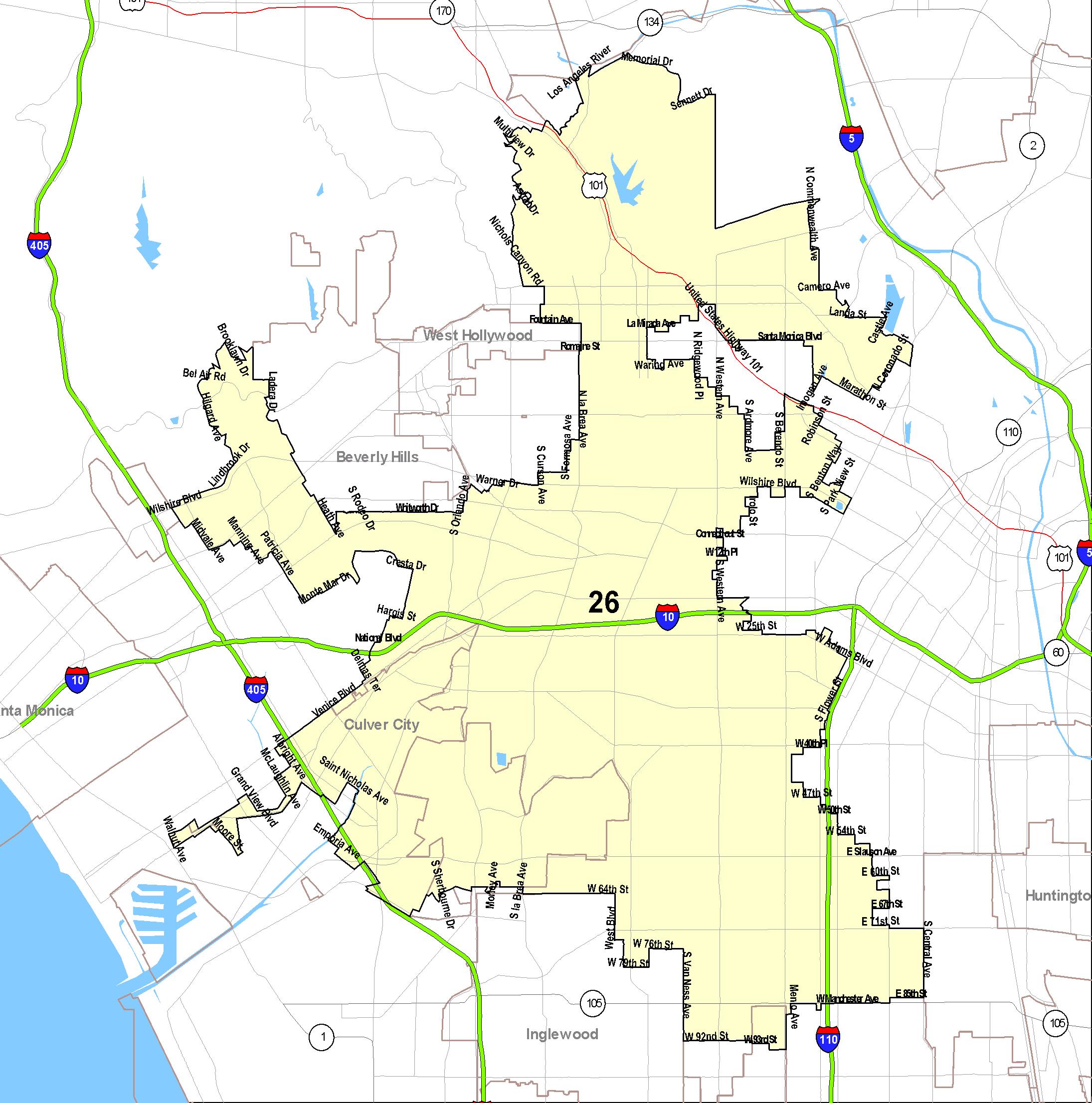
So, this belongs to a retired (the small r) Senator (the big S) from District 26 (links to jpg map of district), and it's the 3rd vehicle owned by a former Senator in this district.  I'm guessing, since there are more than one retired Senators from this LA district (the two most recent are Mark Ridley-Thomas and Kevin Murray according to Wikipedia), that the R3 could mean the 3rd plate in general or a 3rd plate for a particular retired Senator, or the 2nd plate of the 2nd retired Senator.


So, why would a retired Senator want to identify him or herself this way? Some possible answers:
  • They are proud to have served the people of the district and want people to know they are around in case they want to talk to them.
  • Status
  • Hope police treat him more leniently.

It's not because the license plates are free, because they aren't.  I checked with the California DMV and Technician 553 told me that legislators and retired legislators pay for their plates.  The only Californians who get free license plates are disabled vets.

It would be interesting to ask the people why they got their plates, but usually the car is in traffic or it's parked and no one's around.  But I bet it won't be long before we'll be able to use cell phones to call the drivers near us.  Probably that's already happening and I just don't know.  

The Alaska DMV referred me to the Alaska Legislative Affairs Office and the person there is checking on whether Alaska legislators pay for their special plates.  I'll add that later.
[IT'S LATER - 4pm:  Pam Varni at Legislative Affairs called back to say that:
  • Alaska legislators get sent a free license plate
  • They still have to pay for their regular license plate and keep it current
  • They may put the legislative plate on their car or not, it's up to them
  • Only a sitting legislator may have a legislative plate on the car
  • They used to be numbered 1, 2, 3   . . . with the Governor being 1, Lt. Governor 2, Senate President 3, Speaker of the House 4, and then by seniority.  That ended five or ten years ago.
  • Now the Governor and Lt. Governor get their own plates and House and Senate get H and S plates.  H1 and S1 go to the heads of those two bodies and the rest are numbered by seniority, not district.   She knew of at least one time when a legislator traded another legislator to get the plate with the number of his district.]
I did find out that non-profits and churches in Alaska, with the right paperwork, can get license plates for their vehicles for $10.  Add that to the issues of the last post on property tax-exempt houses.

Monday, August 29, 2011

Allen Prevo Divorce Revives Questions About Anchorage Baptist Temple's Housing Tax Exemptions

Mel Green's long piece at Bent on the divorce proceedings between Jerry Prevo's son and daughter-in-law focuses on the status of the house they live in.  It's one of the tax-exempt properties owned by the Anchorage Baptist Temple.  From what Green has found in the court proceedings, it appears that Allen Prevo gets paid a housing allowance which goes to pay for a rent-to-own arrangement.  Is the property tax-exempt house the church's or Allen Prevo's?  This is all coming out because the judge is trying to determine how the value of the house is to be factored into the divorce settlement.  Allen Prevo's attorney, Wayne Anthony Ross, has filed a motion to seal the court documents.

The post begins:

Court documents in the divorce of Allen Prevo, son of Anchorage Baptist Temple pastor Jerry Prevo, and Holly Jo Prevo raise questions about ABT religious exemption housing. Or, in the judge’s words, “if there was a tax appraiser or a reporter from the Anchorage Daily News, things would not look good… it’s pretty loosey-goosey to me.”

Alaskans, particularly those who live in Anchorage, have an interest in this because, as Green writes further down in the post:
Anchorage news junkies may remember that in April 2004, In April 2004, municipal tax assessors revoked the exemption for four ABT-owned houses that were determined to not qualify for a religious exemption because none of the people living in them was “a bishop, pastor, priest, rabbi, minister or religious order of a recognized religious organization” as specified in state law about property tax exemptions.  Three were teachers at the ABT-affliated Anchorage Christian Schools. The fourth was a janitor.  Then, a couple of years later, the Municipality discovered that an additional six ABT-owned houses were occupied by teachers.
Anxious to retain its tax exemption on those houses, ABT enlisted the help of assistant pastor Glenn Clary, who also happened to be the treasurer of the Alaska Republican Party, to go down to Juneau and lobby legislators to fix things.  The Republican-dominated legislature was quick to respond: in March 2006, Senate President Ben Stevens drafted language which added “an educator in a private religious or parochial school” to the list of people whose residence in a house made the house exempt from property taxes.  Furthermore, the new language defined a “minister” to be someone who is considered one and is “employed to carry out a ministry” of a religious organization.  Stevens then asked Sen. Bert Stedman, chairman of the Senate Community and Regional Affairs Committee, to introduce the new language into a redraft of an obscure property tax bill that Sen. Con Bunde had introduce the previous year.  Public testimony on the bill a few days later was aligned squarely against the bill, but legislators advance it anyway, and it ultimately passed and was signed into law by Gov. Frank Murkowski.  The ACLU of Alaska sued, but ultimately a Superior Court judge found the new law constitutional.
The long post reflects Green's usual careful and detailed analysis and is well worth people's time.

Michael Dirda On The Importance of Books


Michael Dirda likes books.  He has, he said, since he sat on his mom's lap while she read to his four year old self. 

He likes them so much, he reads for food.  As a book reviewer for the Washington Post. 

After speaking at the UAA Convocation Friday (I think), he spoke at the Marston Auditorium at the Loussac Library as part of the 25th Anniversary of the current Loussac library. (When Loussac gave his books to start the Anchorage library, as I recall the story, the agreement included his name going on the main library building, even if it changed, which it has done several times.)  Wilda Marston, who was the key champion of building the new (25 year old) Loussac library, was in the audience, in the room named in her honor. 

I've never heard of Dirda before (yes, I'm just an Anchorage hick), but he'd be someone I'd enjoy going to dinner with - I know that after hearing the talk and getting to talk to him briefly at the reception in the Ann Stevens room. As he spoke of his childhood libraries, I thought of myself walking home from the library as a kid, with a stack of books to my chin.  And I remember the many libraries in my life fondly. 

But I'm not quite as into books as Dirda.  He said he had 15 or 25 thousand books.  I'm opposed to having so many 'things' in general.   Even books.  The library has them all.  And he said, in answer to a question about paper books versus electronic books, that he felt the screen versions somehow seemed to be too distracting, that he fears people won't read them as deeply.  He didn't get specific here - mostly his feelings on this.  It certainly is easier to be distracted by an incoming email or to see who just entered Skype, but people of all technologies have lamented what would be lost by the ones replacing them.  I've had plenty of students who couldn't get deep into their paper medium assignments.  And more important, different people connect to different media.  Dirda is clearly a book reader.  But lots of kids get stoked on other ways to connect to the rest of the world.  Yes, books are different, feel different, and the seeking out of them takes us to bookstores and libraries that have a special smell and sanctuary like quality.  But I'm not sure how much of that mystique is related to "the book"  and how much simply to his (and my) childhood experiences.  And today's generation will have similar nostalgia for their Kindles and iPads and reading them in coffee shops. 

I was sitting in the back of the auditorium and couldn't ask my question.  Fortunately, someone closer, asked it:  How did his relationships with authors impact his ability to review their books?  He said he tries not to become friends with too many authors because he cannot review their books if he does.  At the reception, he added that writing his memoirs past his early life is difficult because it is hard to write about living people - an invasion of privacy.  He changed names, for instance, or skipped over, old girlfriends, because they may not appreciate having their relationship with him revealed so publicly.  I know that some writers feel their 'art' is above all other values, but I lean with Dirda on this.  Our relationships are more important. 

I've since looked at some of his writing.  (I tried to find reviews of books I've read, but I couldn't find a list online, and googling Dirda with the names of books I could think of wasn't yielding results.) (I did find such a page, but the links to the next pages didn't work for me.) His writing is honest, thoughtful, and rich, yet kind.  (He'd said that at the Post he'd start books and if they didn't work for him, he'd pawn them off - my phrasing, not his - to someone else to review.  "Why read books I don't like?"  And so the vast majority of his reviews are positive.)

He's headed out of town for a little Alaska sightseeing.  So you folks in Seward and Homer and parts in between, he might be eating at the restaurant table nearby or checking out your library in the next few days.  

By the way, one of the people most responsible for bringing Dirda to Alaska, Dean of UAA's Honor College and editor of Alaska's nationally recognized literary journal The Alaska Quarterly, Ron Spatz, was prominently interviewed on the National Endowment for the Arts blog Art Works in July.

Sunday, August 28, 2011

Drinking, Drugs, and Colonoscopies

In 2001 when the doctor said to come back in 2011 it seemed so far out in the future.  But starting yesterday I was on my two day liquids diet in prep for cleaning out my system so he can send his instruments in to check me for polyps.

Is this something we need to do?  My doctor - I have a good one I trust - suggested yes.

What are the odds of colon cancer?  From the National Cancer Institute: 

Incidence Rates by Race
Race/EthnicityMaleFemale
All Races55.0 per 100,000 men    41.0 per 100,000 women
White54.4 per 100,000 men    40.2 per 100,000 women
Black67.7 per 100,000 men    51.2 per 100,000 women
Asian/Pacific Islander 45.4 per 100,000 men    34.6 per 100,000 women
American Indian/Alaska Native a42.7 per 100,000 men    40.0 per 100,000 women
Hispanic b39.9 per 100,000 men    28.4 per 100,000 women


That's five white males out of 10,000; 1/2 a person out of 1000;  1/20 a person out of 100.  I'm not even sure how to write the percentage.  .005%?  That seems like a pretty low risk.  But further down on that page it says:
Based on rates from 2005-2007, 5.12% of men and women born today will be diagnosed with cancer of the colon and rectum at some time during their lifetime. This number can also be expressed as 1 in 20 men and women will be diagnosed with cancer of the colon and rectum during their lifetime. These statistics are called the lifetime risk of developing cancer. Sometimes it is more useful to look at the probability of developing cancer of the colon and rectum between two age groups. For example, 2.04% of men will develop cancer of the colon and rectum between their 50th and 70th birthdays compared to 1.53% for women.
That looks riskier, but still. . . the only risk factor I have for colorectal cancer is age.  

So what is colon cancer?  Here's an explanation from the Mayo Clinic website:
Colon cancer is cancer of the large intestine (colon), the lower part of your digestive system. Rectal cancer is cancer of the last several inches of the colon. Together, they're often referred to as colorectal cancers.

Most cases of colon cancer begin as small, noncancerous (benign) clumps of cells called adenomatous polyps. Over time some of these polyps become colon cancers.
Polyps may be small and produce few, if any, symptoms. For this reason, doctors recommend regular screening tests to help prevent colon cancer by identifying polyps before they become colon cancer.
Poster in Dr's Office - Click to Enlarge


The Mayo Clinic site explains colonoscopy this way:

Colonoscopy uses a long, flexible and slender tube attached to a video camera and monitor to view your entire colon and rectum. If any suspicious areas are found, your doctor can pass surgical tools through the tube to take tissue samples (biopsies) for analysis.

I'm guessing this is one of those examples of how health care coverage skews how health care money is spent.  The money spent on people over 50 with insurance for  colonoscopies,  would have a much bigger positive impact on American health if it were spent on preventive care for pregnant women and children without health coverage.

The Drinking

So, in preparation for Monday, I've had to be on liquid diet Saturday, today, and Monday.  The instructions say:
Stay on a FULL LIQUID DIET the entire TWO days (anything that is liquid or melts into a liquid;  no solids).  Acceptable items include cream of wheat (not oatmeal), Jell-O, puddings, ice cream, yogurt (the type without the fruit), Ensure, chicken broth and tomato soup (no crackers), etc.
The Drugs Part 1

Then Sunday night I start taking the purging medicine and move to clear liquids only.


Naturopaths tell us that cleansing the bowels is a good thing.
In fact, nothing has changed since the great natural healer Dr. John Harvey Kellogg, founder of the Battle Creek Sanitarium in Michigan, declared nearly a century ago that “90% of the diseases of civilization are due to improper functioning of the colon.” (from curezone)
WebMD says cleansing routines are worthless:
But the science behind the detox theory is deeply flawed, says Peter Pressman, MD, an internal medicine specialist at Cedars-Sinai Medical Center in Los Angeles. The body already has multiple systems in place -- including the liver, kidneys, and gastrointestinal tract -- that do a perfectly good job of eliminating toxins from the body within hours of consumption.
"There's no evidence at all that any of these approaches augment the body's own mechanisms," Pressman tells WebMD.


So I figured this was a chance for a lot of smoothies this weekend.  Except when I got the ingredients into the blender, it made a lot of noise, but the blades didn't go around.


If I screwed it on loosely, the blades went round, but it also leaked all over.  We ended up buying another Osterizer - $29 didn't seem too bad.


When we got it home, I saw the rubber seal was thicker than the old one.  Even though ours is at least 20 years old, the seal from the new one fit nicely on the old one.  And when I turned on the blender, it worked fine.  Who would have thought such a tiny difference in thickness would shut down the machine?


New one on the right
So, J went back to the store and bought two new rubber rings and returned the new blender.  But think about it.  The new machine cost $29.  Two rubber rings cost $4.99.  What's wrong with that?  In the end we were $25 ahead by one way of thinking, but I was in a rubber factory in India where they made things like these rubber rings for a fraction of a cent each.  (I've posted about this cost disparity elsewhere.)

I also took shameless advantage of the situation to buy some things I'm allowed to consume this weekend.


So, there's lots of drinking going on.  Made some mushroom soup last night and more smoothies this morning.

The Drugs Part 2

And tomorrow there will an anesthetic that leads to these instructions:
Make arrangements for a ride home and a caregiver following the procedure, you should not drive for 12 hours after the exam as you will have been given an IV medication during the procedure that will reduce your reaction time.
 I do remember the last time.  The time allotted for the procedure is an hour.  I remember  it seemed like it was over in 5 minutes.  So the drugs do work in interesting ways.  But we live a five minute walk from the office.  The person at the desk said they would not let me walk home. I know, I'm being a guy about this.   We'll see how I feel.   J will be there.  With a car.

And they didn't think I should go to the book club meeting tomorrow night.  I understand that the medication is powerful, but it works differently on different people.  But I won't drive - I would ride my bike normally anyway.  We'll see how I feel.  J has volunteered to take me to the meeting and pick me up.  They say that people have reported going out for dinner after the procedure and not remembering anything.  I'll take notes as I do things.  We'll see.

The National Cancer Institute says:
On January 1, 2008, in the United States there were approximately 1,110,077 men and women alive who had a history of cancer of the colon and rectum -- 542,127 men and 567,950 women. This includes any person alive on January 1, 2008 who had been diagnosed with cancer of the colon and rectum at any point prior to January 1, 2008 and includes persons with active disease and those who are cured of their disease.
Most people with colon or rectal cancer are over 50.  (In 2000 there were about 77 million people over 50 in the US.)   The doctor said the rates of colorectal cancer have dropped significantly, mainly because it is one of the few cancers where they can take easy preventative measures before cancer forms - by cutting out the polyps before they become cancerous.   

I have no idea how much this procedure costs.  Most of it will be covered by insurances.  But I still think the money would be better spent on pregnant women and children health care and health education. 

Trivia note:  I think this is the second time I've had a post with 'colon' in the title, and the first one was only two weeks ago.

Life is Good - MacHaus Replaced the Mac Keyboard, Trackpad, and Top Case Free

It's almost like having a new computer.  The cursor isn't skipping around, and everything I can see and feel as I type is new except the screen.  As I mentioned earlier, Apple acknowledged the cracks along the edge of the top case [that's the part that surrounds the keyboard and is the top of the case that houses the hard drive] as a design flaw.  My computer is about four years old now, but it was still covered.  I brought it in about noon and they had the parts and called about 5pm to say it was ready for pick up. 

So, if you have a Macbook, and there's a crack in the plastic case along the edge, you might take it to a local Apple dealer and see if it is covered for repairs.  I really wasn't looking forward to dealing with the cursor problems, but I was very pleasantly surprised. 

Saturday, August 27, 2011

Mr. Doob's Google Gravity

I have no idea what this is about, but someone got to this blog from here.

http://mrdoob.com/projects/chromeexperiments/google_gravity/


Go ahead, click on it.  It'll just take a few seconds.  Then, move your cursor.

[UPDATE:  Also check out posts on Weenie Google, Epic Google,  and the Revolving Internet. ]

[UPDATE 9/13:  Here's a post I've now done on "Who Is Mr. Doob?"  An amazing, creative guy.]

It Always Works When You Don't Want It To

I'm at the MacHaus, trying to show them what my keyboard is doing.  And, of course, it is working fine now.  Since it tends to need to be used a bit before the cursor starts jumping around, I'm typing here to see if I can get it so they can see what my problem is. 

But except for one or two errant jumps by the keyboard, all is well. 

But, it turns out, there's a crack on the top case.  There was one before and Apple replaced it and the keyboard free once already because it was a design flaw.  Apparently the edge on top (the casing around the screen) seems to cause that problem and so they will replace the top case, keyboard, trackpad, and the topcase for free.  That might solve my problems. 

And they have the parts available in town.  This is looking better than I expected.

There are some pictures of the crack the first time - January 2009 - here.  This time the crack is on the left side, not the right side.  But if you have a crack like that on your MacBook, and it's less than five years old, it seems like they'll replace it all for free.


The Help

Background:  In 2000, my wife and I found ourselves driving through Mississippi.   We'd driven to our daughter's graduation on the East Coast, and after a stop in Chicago, we were headed to visit relatives in New Orleans.  I realized, as we crossed the border, that I held deep feelings about Mississippi.  It felt like a place a forbidden place - sort of like Albania.  We were only there two days, but in that short time, there were two conversations that give a sense of how race was still an important issue.

We'd walked up the levee to look into a floating casino when a couple began talking to us.  Being in a car with Alaska license plates seemed to give us a neutrality.  We may be from the north, but not that North.  After only a few minutes, we were being told that one had to send one's children to private schools and a lot of nasty stuff about how impossible the Black population was.  (I'm not stupid, and I probably wouldn't have subjected my kids to being the only White kids in a Black school where racial tension was high.  But why have things gotten to that point?  And I actually don't even know that it would have been dangerous for my kids.  But I do know that Mississippi schools are pretty low in achievement and I probably wouldn't have wanted my kids in a White school in Mississippi either.)

The second conversation was pretty surreal.  We were looking into boat rides on the Mississippi when a local gentleman - all the Southern hospitality you see in the movies - began to offer us advice.  It was a delightful encounter until he morphed into something else.  He switched the topic to the movie Mississippi Burning and how it totally distorted what had happened in Mississippi in the 1960s.  All those degenerate Northern agitators, smoking dope and having sex, coming down to tell us how to live our lives.  We didn't have a race problem - everyone got along just fine.  He said he'd been a high school student at that time.  And then he morped back into the charming Southern gentleman who'd begun the conversation and gave us advice for where to have dinner that night.  And we had a very good meal there.

The Help


My wife told me it was a chick flick and I probably wouldn't want to go.  But then she said some other things that I interpreted as it being better for our relationship if I went.  I knew nothing about the movie before it started - a good way to see a movie.

At dinner afterward we talked about the movie.  She mentioned a critique she'd heard from a black reviewer who felt that a white woman shouldn't have been the central character in the movie.  (It's about a recent white college graduate, Skeeter, in Mississippi who wants to be a writer.  All her old high school friends seem to be more interested in finding husbands than finding jobs.)

The film starts in 1962 (Medgar Evers was shot in 1963 and I'm guessing it begins the summer before that) and one of the key topics at her friends' bridge parties is whetther they allow the 'colored' help to use the same bathrooms as the family uses.  Skeeter notices that these conversations take place in front of the help.  She gets the idea of writing a book from the perspective of the Black help.

I've criticized other movies - Blood Diamonds, The Constant Gardener, and particularly The Last King of Scotland - for using white main characters in what are essentially movies about Africa and Africans. So I had to think about whether the criticism was valid here.  The fact that I assumed the film was based on a true story probably affected my acceptance of Skeeter's central role.  When I learned it was fiction,  the criticism seemed more valid.   Was it any more plausible that a White woman would be able to conceive of such a book and get it published in 1963 than the Black women themselves?  I can think of reasons why it might be, but I'm not sure either way.

But that didn't distract from the power of the movie to charmngly bring home how insidious segregation was.  And it wasn't that long ago - not yet 50 years.  The young college grads in the movie would be in their late sixties or early seventies now.  And while some of them may have changed, others would still hold many of the racial beliefs they were raised with.

And from there we can understand the revulsion felt by some at the idea of a Black president.  I'm not suggesting everyone who lived in that time and place is still trapped in that mindset.  Nor am I suggesting that everyone opposed to Obama is motivated by race.   But as the incidents I told at the beginning show, those attitudes were still easy to find in Mississippi just eleven years ago.  And the extreme animosity shown toward the President by some - along with racially charged words like 'boy' and 'dark skinned' that some have used - convinces me that race is a factor in some people's reaction to Obama.

And right after we saw the movie,  we heard the story of White kids who killed a 49 year old Black man in the very town the movie took place - Jackson, Mississippi.

The biggest surprise I got at the movie, was when the White audience in the 3/4 full theater (one of the big ones at the Century) applauded at the end of the film.   Made me feel much better about folks in Anchorage.

By the way, one of the first things we did when we got back to Anchorage in 2000 was to rent the film Mississippi Burning and we had little trouble figuring out which characters might have been the man who'd suggested such a great place to eat.

Friday, August 26, 2011

“[under the law] just because something is in the public domain doesn’t mean it’s been officially released or declassified by the U.S. government.”

That's what a CIA spokeswoman, Jennifer Youngblood, is quoted as saying by the NY Times, in a story about the redactions made by the CIA to a book about 9/11 by written by a former FBI agent.
The agent, Ali H. Soufan, argues in the book that the C.I.A. missed a chance to derail the 2001 plot by withholding from the F.B.I. information about two future 9/11 hijackers living in San Diego, according to several people who have read the manuscript. And he gives a detailed, firsthand account of the C.I.A.’s move toward brutal treatment in its interrogations, saying the harsh methods used on the agency’s first important captive, Abu Zubaydah, were unnecessary and counterproductive.
The article suggests that the C.I.A.'s redactions are more about either avoiding embarrassment or trying to control how the history of 9/11 is told than national security.  The CIA spokeswoman, of course, denies this:
“The suggestion that the Central Intelligence Agency has requested redactions on this publication because it doesn’t like the content is ridiculous. The C.I.A.’s pre-publication review process looks solely at the issue of whether information is classified.”
We saw this issue earlier when it came out that federal employees, who are not allowed to read classified information they aren't cleared to read, were not allowed to read any of the wikileaks cables, even though the material was in the public domain.


As I often try to point out here, everything is related, and today, there was an article in the ADN by Judith Kleinfeld titled "Thought the Cure for Most Blunders."  In it she cites an example from psychologist Madeline Van Heckeof's book, Blind Spot, about going to the driveup ATM window and proudly pointing out to a young foreign visitor in the car, that the US is sensitive to the handicapped - they have Braille on the ATM machine.  The young guest laughs and asks,  "How many blind people drive?"


Van Heckeof, as related by Kleinfeld, goes on to explain that
Most of the time our minds work pretty well. But sometimes smart people do stupid things, she points out. We have a systematic set of "blind spots" in our minds like the blind spots in our cars.
I strongly believe that people have, what you could call, blind spots.  And we shouldn't have blind spots when looking at stories about blind spots.  Just like anti-tax zealots who ridicule scientific studies funded by the US government by taking things totally out of context, I shouldn't do the same thing here.

It does seem silly to have braille on a drive through ATM, until you think that when they make the machines, they probably don't distinguish between the keys on walk-up and drive-through machines.  So they just put the braille on all of them.  Should they make different keys for drive-through machines? Maybe not so ridiculous in the long run.  

But that doesn't mean we don't have blind spots.  Part of this blog's goal is to get people to see such blindspots.

So, what about hiding classified material?  I'm less tolerant about this, but I can think of reasons why the C.I.A.  would want to suppress material, even if it's already publicly available.
  1. While it might be available in the public domain, it might not be available where someone was likely to find it.  A new book will make it more accessible to more people.  
  2. A book could take a lot of different pieces of information available in different places in the public domain and put them all together - such as how to build a bomb.  Fewer people would be able to figure it all out if the book didn't come out.
  3. All of us who have made mistakes, surely, would like to prevent others from explaining how stupid we were, if we could. 
  4. As suggested in the article, there may be an attempt to control the information that is used to write history and information that contradicts one's beliefs.  In this case, the article suggests that Soufan's account contradicts, among other things, Cheney's assertions that torture was necessary to get information.
While there are times when points 1 and 2 might be legitimate, my bias tends to favor errors of openness over errors of secrecy.  It just seems openness, in the long run, is better for a democracy than secrecy.  If one uses the possibility of something bad happening, one could justify making everything secret. 

The 3rd reason, while a natural inclination for all humans, isn't justifiable for government officials in a democracy.  The information has to get out and then people can form their conclusions about performance and accountability.

The same logic fits for the 4th point.  Suppressing information is no way to find the truth.

So, check out your own blind spots.  And gently help others, including me, see theirs. 

Thursday, August 25, 2011

"When I'm an Elder" (Where's Bethel?)

Good stuff here.  I get to the video slowly.  If you don't care about the other stuff, just slide on down to the video.  It's short and well worth watching.  Then you might want to go back and read. 

This project was first conceived by teens in a youth group (Teens Acting Against Violence -TAAV)  housed at the Tundra Women's Coalition in Bethel, Alaska in the Yukon-Koskokwim area.

For non-Alaskans, and for many Alaskans too, a little geography lesson would help.   The Yukon-Kuskowim Delta is where the two large rivers - Yukon and the Kuskokwim - drain into the Bering Sea.


Based on map from Enchanted Learning.com

Most people have heard of the Yukon River, but what about the  Kuskokwim?

Wikipedia says the Kuskokwim River is 702 miles long and
 is the ninth largest river in the United States by average discharge volume at its mouth and seventeenth largest by basin drainage area.[6]
The river provides the principal drainage for an area of the remote Alaska Interior on the north and west side of the Alaska Range, flowing southwest into Kuskokwim Bay on the Bering Sea. Except for its headwaters in the mountains, the river is broad and flat for its entire course, making it a useful transportation route for many types of watercraft. It is the longest free flowing river* in the United States.
*What's a free flowing river?
A body of water existing or flowing under natural conditions without impoundments, diversions, straightening, riprapping, or other modification of the waterway (as defined in the Wild and Scenic Rivers Act - 16 USC 1286 [b]). Also see Riprap. (references)

According to Wikipedia, the Yukon is 1980 miles long and there's a dam at White Horse, Yukon Territories.


Adapted from a map at KYUKonAssignment in Kuwait

When I am an Elder: A World Without Violence includes youth from Bethel, Kipnuk, Kwethluk, and Napaskiak**  reflecting on what they would like to see in their communities when they are  Elders.  (*My source spelled the village with an 's'.  Maybe there are two similarly named villages, but I'm guessing it doesn't have an 's'.)
[UPDATE Jan. 31, 2013 - see comment #3 below that explains there are two - one with and one without the 's'.  Thanks!]


The video was made by the Alaska Network on Domestic Violence and Sexual Assault [I'm on the steering committee which is why I know about this], with funding from the Council on Domestic Violence and Sexual Violence.


For non-Alaskans, I'd point out that Western Alaska (and most of Southeastern Alaska) is off the road system. An area larger than any other US state, (and possibly Texas and California combined) is not connected by any roads. Transportation to and from these communities is by boat in the summer and snow machine or dogsled in the winter, by air all year. The map below shows Alaska's road system.


map from travelalaska

(Those straight east-westish lines aren't roads.)